


 |
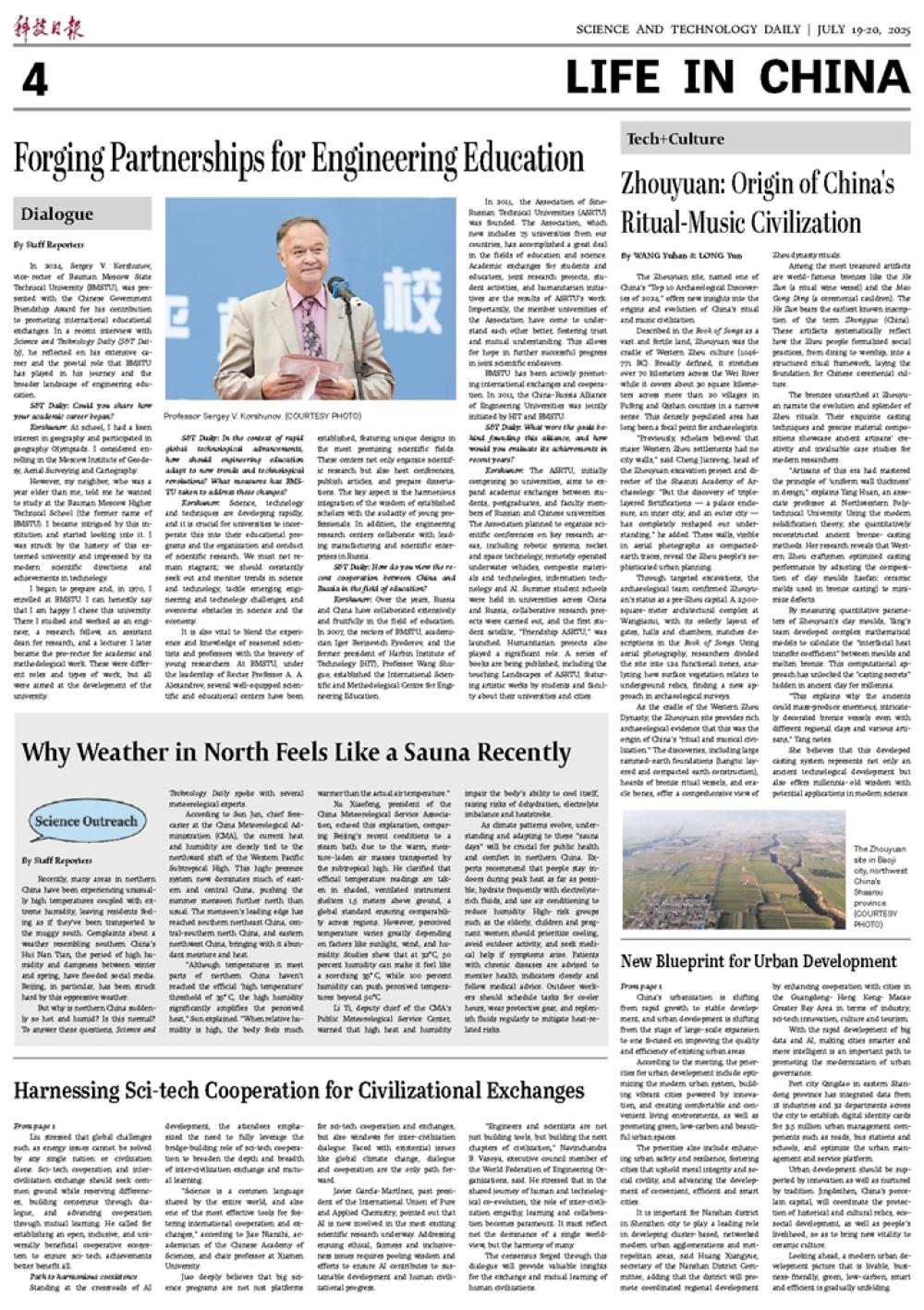
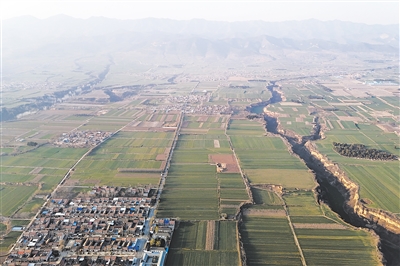
| The Zhouyuan site in Baoji city, northwest China's Shaanxi province. (COURTESY PHOTO) |
The Zhouyuan site, named one of China's "Top 10 Archaeological Discoveries of 2024," offers new insights into the origins and evolution of China's ritual and music civilization.
Described in the Book of Songs as a vast and fertile land, Zhouyuan was the cradle of Western Zhou culture (1046-771 BC). Broadly defined, it stretches over 70 kilometers across the Wei River while it covers about 30 square kilometers across more than 20 villages in Fufeng and Qishan counties in a narrow sense. This densely populated area has long been a focal point for archaeologists.
"Previously, scholars believed that major Western Zhou settlements had no city walls," said Chong Jianrong, head of the Zhouyuan excavation project and director of the Shaanxi Academy of Archaeology. "But the discovery of triple-layered fortifications — a palace enclosure, an inner city, and an outer city — has completely reshaped our understanding," he added. These walls, visible in aerial photographs as compacted-earth traces, reveal the Zhou people's sophisticated urban planning.
Through targeted excavations, the archaeological team confirmed Zhouyuan's status as a pre-Zhou capital. A 2,500-square-meter architectural complex at Wangjiazui, with its orderly layout of gates, halls and chambers, matches descriptions in the Book of Songs. Using aerial photography, researchers divided the site into 124 functional zones, analyzing how surface vegetation relates to underground relics, finding a new approach in archaeological surveys.
As the cradle of the Western Zhou Dynasty, the Zhouyuan site provides rich archaeological evidence that this was the origin of China's "ritual and musical civilization." The discoveries, including large rammed-earth foundations (hangtu: layered and compacted earth construction), hoards of bronze ritual vessels, and oracle bones, offer a comprehensive view of Zhou dynasty rituals.
Among the most treasured artifacts are world-famous bronzes like the He Zun (a ritual wine vessel) and the Mao Gong Ding (a ceremonial cauldron). The He Zun bears the earliest known inscription of the term Zhongguo (China). These artifacts systematically reflect how the Zhou people formalized social practices, from dining to worship, into a structured ritual framework, laying the foundation for Chinese ceremonial culture.
The bronzes unearthed at Zhouyuan narrate the evolution and splendor of Zhou rituals. Their exquisite casting techniques and precise material compositions showcase ancient artisans' creativity and invaluable case studies for modern researchers.
"Artisans of this era had mastered the principle of 'uniform wall thickness' in design," explains Yang Huan, an associate professor at Northwestern Polytechnical University. Using the modern solidification theory, she quantitatively reconstructed ancient bronze-casting methods. Her research reveals that Western Zhou craftsmen optimized casting performance by adjusting the composition of clay moulds (taofan: ceramic molds used in bronze casting) to minimize defects.
By measuring quantitative parameters of Zhouyuan's clay moulds, Yang's team developed complex mathematical models to calculate the "interfacial heat transfer coefficient" between moulds and molten bronze. This computational approach has unlocked the "casting secrets" hidden in ancient clay for millennia.
"This explains why the ancients could mass-produce enormous, intricately decorated bronze vessels even with different regional clays and various artisans," Yang notes.
She believes that this developed casting system represents not only an ancient technological development but also offers millennia-old wisdom with potential applications in modern science.