


 |
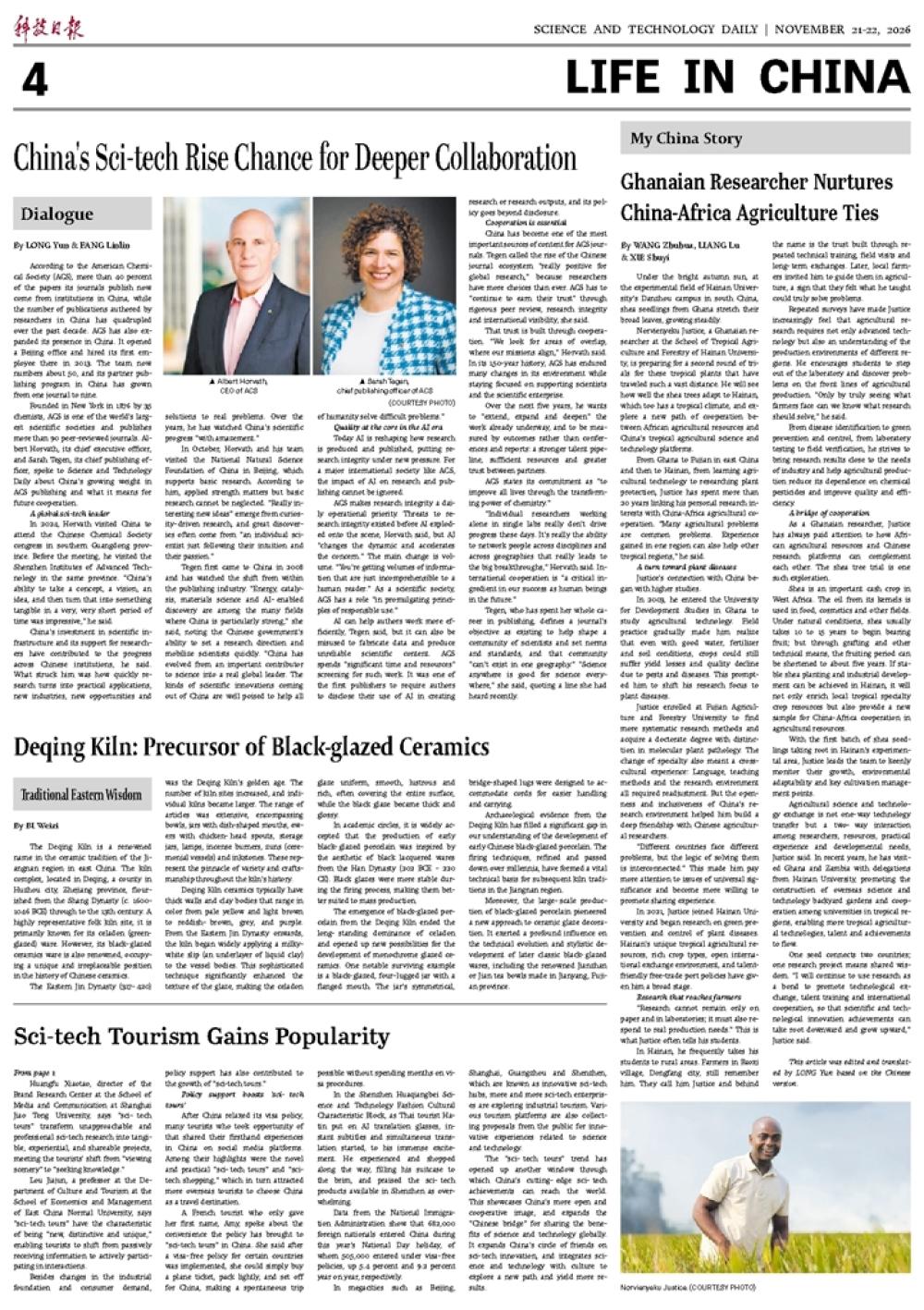
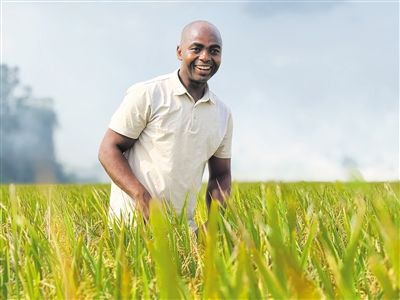
| Norvienyeku Justice. (COURTESY PHOTO) |
Under the bright autumn sun, at the experimental field of Hainan University's Danzhou campus in south China, shea seedlings from Ghana stretch their broad leaves, growing steadily.
Norvienyeku Justice, a Ghanaian researcher at the School of Tropical Agriculture and Forestry of Hainan University, is preparing for a second round of trials for these tropical plants that have traveled such a vast distance. He will see how well the shea trees adapt to Hainan, which too has a tropical climate, and explore a new path of cooperation between African agricultural resources and China's tropical agricultural science and technology platforms.
From Ghana to Fujian in east China and then to Hainan, from learning agricultural technology to researching plant protection, Justice has spent more than 20 years linking his personal research interests with China-Africa agricultural cooperation. "Many agricultural problems are common problems. Experience gained in one region can also help other tropical regions," he said.
A turn toward plant diseases
Justice's connection with China began with higher studies.
In 2003, he entered the University for Development Studies in Ghana to study agricultural technology. Field practice gradually made him realize that even with good water, fertilizer and soil conditions, crops could still suffer yield losses and quality decline due to pests and diseases. This prompted him to shift his research focus to plant diseases.
Justice enrolled at Fujian Agriculture and Forestry University to find more systematic research methods and acquire a doctorate degree with distinction in molecular plant pathology. The change of specialty also meant a cross-cultural experience: Language, teaching methods and the research environment all required readjustment. But the openness and inclusiveness of China's research environment helped him build a deep friendship with Chinese agricultural researchers.
"Different countries face different problems, but the logic of solving them is interconnected." This made him pay more attention to issues of universal significance and become more willing to promote sharing experience.
In 2021, Justice joined Hainan University and began research on green prevention and control of plant diseases. Hainan's unique tropical agricultural resources, rich crop types, open international exchange environment, and talent-friendly free-trade port policies have given him a broad stage.
Research that reaches farmers
"Research cannot remain only on paper and in laboratories; it must also respond to real production needs." This is what Justice often tells his students.
In Hainan, he frequently takes his students to rural areas. Farmers in Baoxi village, Dongfang city, still remember him. They call him Justice and behind the name is the trust built through repeated technical training, field visits and long-term exchanges. Later, local farmers invited him to guide them in agriculture, a sign that they felt what he taught could truly solve problems.
Repeated surveys have made Justice increasingly feel that agricultural research requires not only advanced technology but also an understanding of the production environments of different regions. He encourages students to step out of the laboratory and discover problems on the front lines of agricultural production. "Only by truly seeing what farmers face can we know what research should solve," he said.
From disease identification to green prevention and control, from laboratory testing to field verification, he strives to bring research results close to the needs of industry and help agricultural production reduce its dependence on chemical pesticides and improve quality and efficiency.
A bridge of cooperation
As a Ghanaian researcher, Justice has always paid attention to how African agricultural resources and Chinese research platforms can complement each other. The shea tree trial is one such exploration.
Shea is an important cash crop in West Africa. The oil from its kernels is used in food, cosmetics and other fields. Under natural conditions, shea usually takes 10 to 15 years to begin bearing fruit; but through grafting and other technical means, the fruiting period can be shortened to about five years. If stable shea planting and industrial development can be achieved in Hainan, it will not only enrich local tropical specialty crop resources but also provide a new sample for China-Africa cooperation in agricultural resources.
With the first batch of shea seedlings taking root in Hainan's experimental area, Justice leads the team to keenly monitor their growth, environmental adaptability and key cultivation management points.
Agricultural science and technology exchange is not one-way technology transfer but a two-way interaction among researchers, resources, practical experience and developmental needs, Justice said. In recent years, he has visited Ghana and Zambia with delegations from Hainan University, promoting the construction of overseas science and technology backyard gardens and cooperation among universities in tropical regions, enabling more tropical agricultural technologies, talent and achievements to flow.
One seed connects two countries; one research project means shared wisdom. "I will continue to use research as a bond to promote technological exchange, talent training and international cooperation, so that scientific and technological innovation achievements can take root downward and grow upward," Justice said.
This article was edited and translated by LONG Yun based on the Chinese version.