


 |
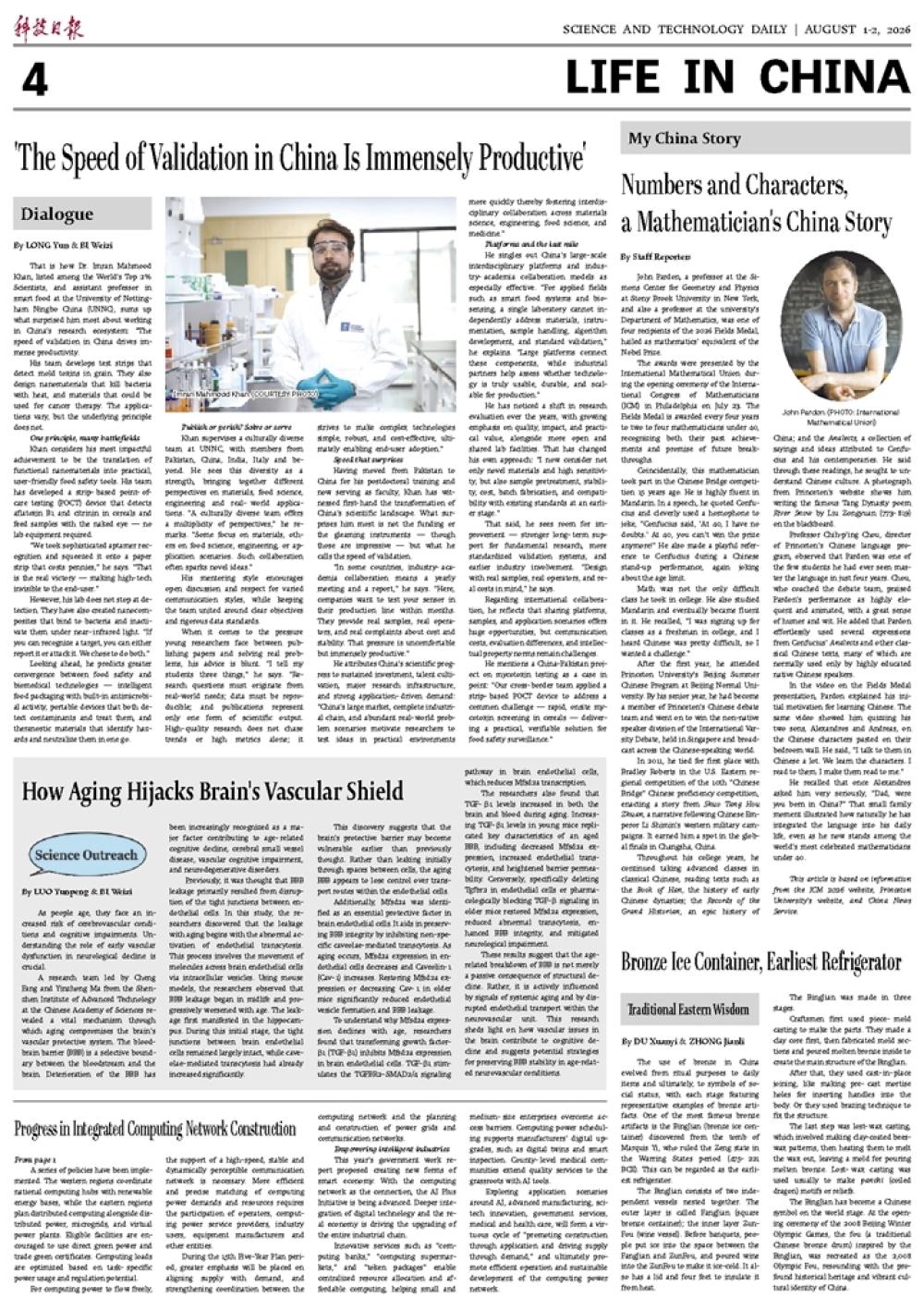
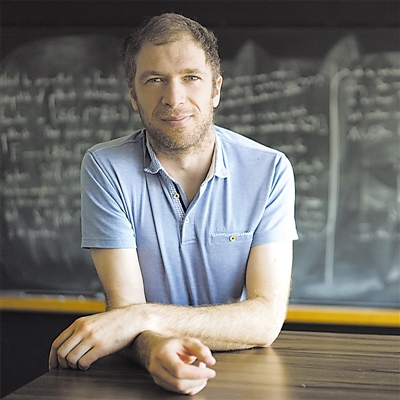
| John Pardon. (PHOTO: International Mathematical Union) |
John Pardon, a professor at the Simons Center for Geometry and Physics at Stony Brook University in New York, and also a professor at the university's Department of Mathematics, was one of four recipients of the 2026 Fields Medal, hailed as mathematics' equivalent of the Nobel Prize.
The awards were presented by the International Mathematical Union during the opening ceremony of the International Congress of Mathematicians (ICM) in Philadelphia on July 23. The Fields Medal is awarded every four years to two to four mathematicians under 40, recognizing both their past achievements and promise of future breakthroughs.
Coincidentally, this mathematician took part in the Chinese Bridge competition 15 years ago. He is highly fluent in Mandarin. In a speech, he quoted Confucius and cleverly used a homophone to joke, "Confucius said, 'At 40, I have no doubts.' At 40, you can't win the prize anymore!" He also made a playful reference to Confucius during a Chinese stand?up performance, again joking about the age limit.
Math was not the only difficult class he took in college. He also studied Mandarin and eventually became fluent in it. He recalled, "I was signing up for classes as a freshman in college, and I heard Chinese was pretty difficult, so I wanted a challenge."
After the first year, he attended Princeton University's Beijing Summer Chinese Program at Beijing Normal University. By his senior year, he had become a member of Princeton's Chinese debate team and went on to win the non?native speaker division of the International Varsity Debate, held in Singapore and broadcast across the Chinese?speaking world.
In 2011, he tied for first place with Bradley Roberts in the U.S. Eastern regional competition of the 10th "Chinese Bridge" Chinese proficiency competition, enacting a story from Shuo Tang Hou Zhuan, a narrative following Chinese Emperor Li Shimin's western military campaigns. It earned him a spot in the global finals in Changsha, China.
Throughout his college years, he continued taking advanced classes in classical Chinese, reading texts such as the Book of Han, the history of early Chinese dynasties; the Records of the Grand Historian, an epic history of China; and the Analects, a collection of sayings and ideas attributed to Confucius and his contemporaries. He said through these readings, he sought to understand Chinese culture. A photograph from Princeton's website shows him writing the famous Tang Dynasty poem River Snow by Liu Zongyuan (773-819) on the blackboard.
Professor Chih?p'ing Chou, director of Princeton's Chinese language program, observed that Pardon was one of the few students he had ever seen master the language in just four years. Chou, who coached the debate team, praised Pardon's performance as highly eloquent and animated, with a great sense of humor and wit. He added that Pardon effortlessly used several expressions from Confucius' Analects and other classical Chinese texts, many of which are normally used only by highly educated native Chinese speakers.
In the video on the Fields Medal presentation, Pardon explained his initial motivation for learning Chinese. The same video showed him quizzing his two sons, Alexandros and Andreas, on the Chinese characters pasted on their bedroom wall. He said, "I talk to them in Chinese a lot. We learn the characters. I read to them. I make them read to me."
He recalled that once Alexandros asked him very seriously, "Dad, were you born in China?" That small family moment illustrated how naturally he has integrated the language into his daily life, even as he now stands among the world's most celebrated mathematicians under 40.
This article is based on information from the ICM 2026 website, Princeton University's website, and China News Service.