


 |
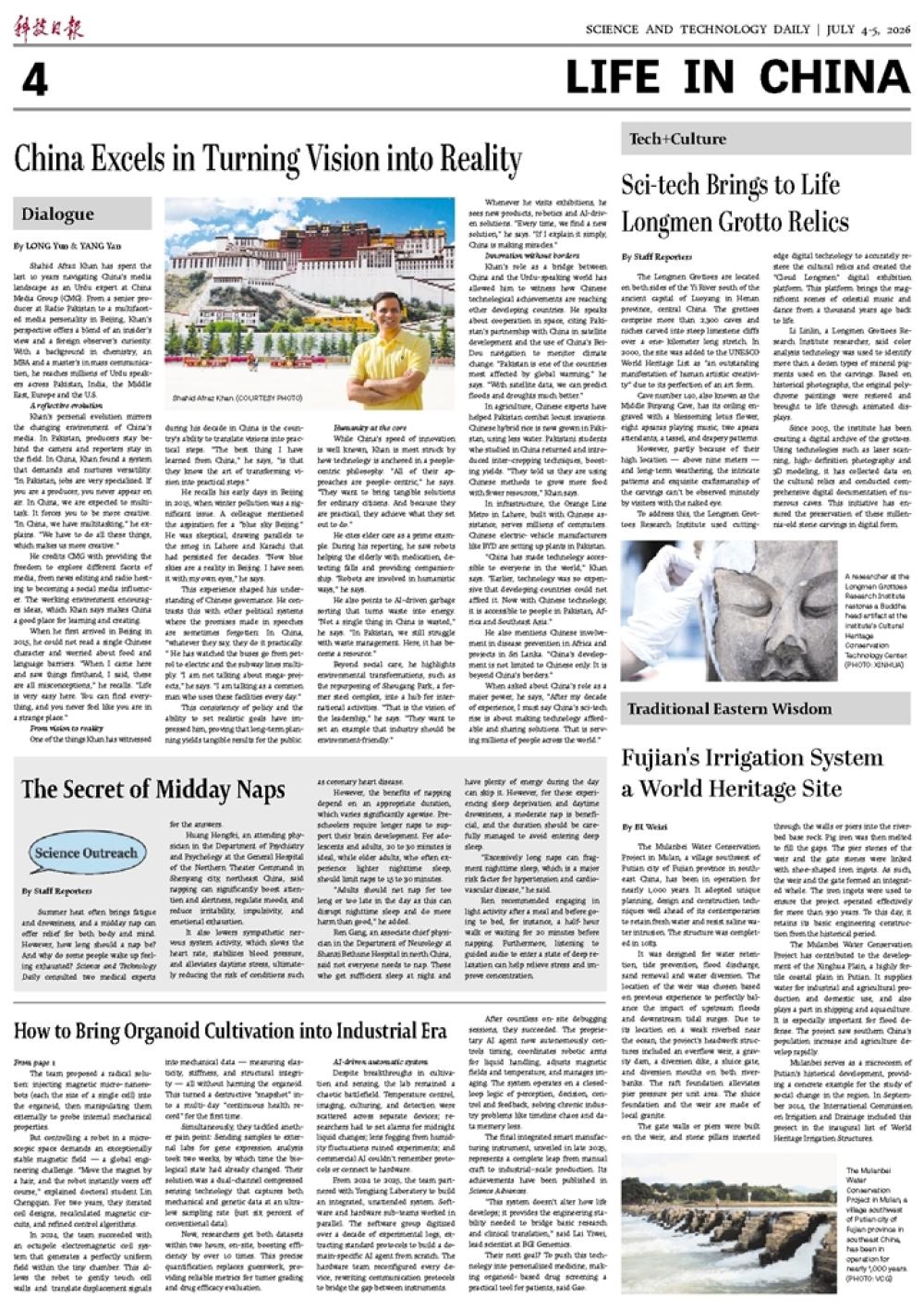
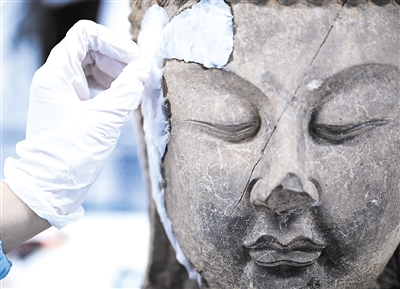
| A researcher at the Longmen Grottoes Research Institute restores a Buddha head artifact at the institute's Cultural Heritage Conservation Technology Center. (PHOTO: XINHUA) |
The Longmen Grottoes are located on both sides of the Yi River south of the ancient capital of Luoyang in Henan province, central China. The grottoes comprise more than 2,300 caves and niches carved into steep limestone cliffs over a one-kilometer long stretch. In 2000, the site was added to the UNESCO World Heritage List as "an outstanding manifestation of human artistic creativity" due to its perfection of an art form.
Cave number 140, also known as the Middle Binyang Cave, has its ceiling engraved with a blossoming lotus flower, eight apsaras playing music, two apsara attendants, a tassel, and drapery patterns.
However, partly because of their high location — above nine meters — and long-term weathering, the intricate patterns and exquisite craftsmanship of the carvings can't be observed minutely by visitors with the naked eye.
To address this, the Longmen Grottoes Research Institute used cutting-edge digital technology to accurately restore the cultural relics and created the "Cloud Longmen" digital exhibition platform. This platform brings the magnificent scenes of celestial music and dance from a thousand years ago back to life.
Li Linlin, a Longmen Grottoes Research Institute researcher, said color analysis technology was used to identify more than a dozen types of mineral pigments used on the carvings. Based on historical photographs, the original polychrome paintings were restored and brought to life through animated displays.
Since 2005, the institute has been creating a digital archive of the grottoes. Using technologies such as laser scanning, high-definition photography and 3D modeling, it has collected data on the cultural relics and conducted comprehensive digital documentation of numerous caves. This initiative has ensured the preservation of these millennia-old stone carvings in digital form.