

 Next
Next


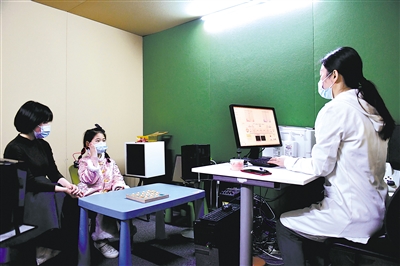 |
| Staff members conduct a hearing test for a young patient undergoing gene therapy in Jinan city, Shandong province. (PHOTO: XINHUA) |
 |
China's Ministry of Science and Technology has issued ethical guidelines for human genetic data research to promote responsible innovation and the healthy, orderly development of human genetic data.
The document seeks to regulate relevant scientific research and technological development activities, while protecting the legitimate rights and interests of research participants and related groups.
"The issuance of this document marks a crucial step forward for China's ethical governance in the field of human genetic data research, moving from a stage of 'principled advocacy' toward 'refined guidance,'" said Cong Bin, an academician of the Chinese Academy of Engineering.
Human genetic data refers to various kinds of data obtained or derived from human biological samples that directly reflect human hereditary information. This includes, but is not limited to, deoxyribonucleic acid (DNA) sequence data of the nuclear genome and mitochondrial genome, transcriptomic data, genotyping data and epigenetic modification data.
The rapid development of gene sequencing, omics technologies and data analysis methods has supercharged genetic research. The advancement has deepened our understanding of disease etiologies, developmental mechanisms, classification systems and therapeutic pathways, providing crucial scientific support for biomedical research, disease prevention and precision medicine.
However, human genetic data possesses unique attributes, including high identifiability, lineage and population correlation and transgenerational continuity. Consequently, related sci-tech activities may trigger multi-layered and complex ethical, legal and social issues.
The guidelines lay down comprehensive regulations governing the basic principles, general requirements, special requirements and public science popularization of human genetic data research.
Sci-tech activities involving human genetic data should uphold the basic principles of promoting human well-being, respecting autonomy, controlling risks, doing no harm and preventing abuse, and ensuring fairness and justice.
They should aim to drive progress in life sciences, medicine and related technology fields, so as to improve human health, advance disease prevention and treatment, and boost public interests and human well-being.
"Prioritizing human well-being means that all research activities must put people first," Cong said. Upholding a cautious approach, the guidelines emphasize risk control and the prevention of abuse. This fully demonstrates China's firm stance on the ethical governance of science and technology.
According to the guidelines, the principles of scientific rationality, legitimate purpose and minimal necessity should be adhered to, and the legitimate rights and interests of individuals respected and protected.
Relevant activities should strictly comply with national laws and regulations. Those engaged in such activities should possess the required qualifications and professional expertise.
Such activities should respect and protect the participants' right to know and choose freely, and follow legal procedures for informed consent.
According to the guidelines, sci-tech activities involving human genetic data should ensure that all data sources are legal, compliant, authentic, accurate and fully traceable.
Such activities should strengthen the protection of genetic privacy. Mining or using data with the intent to violate personal privacy is prohibited.