


 |
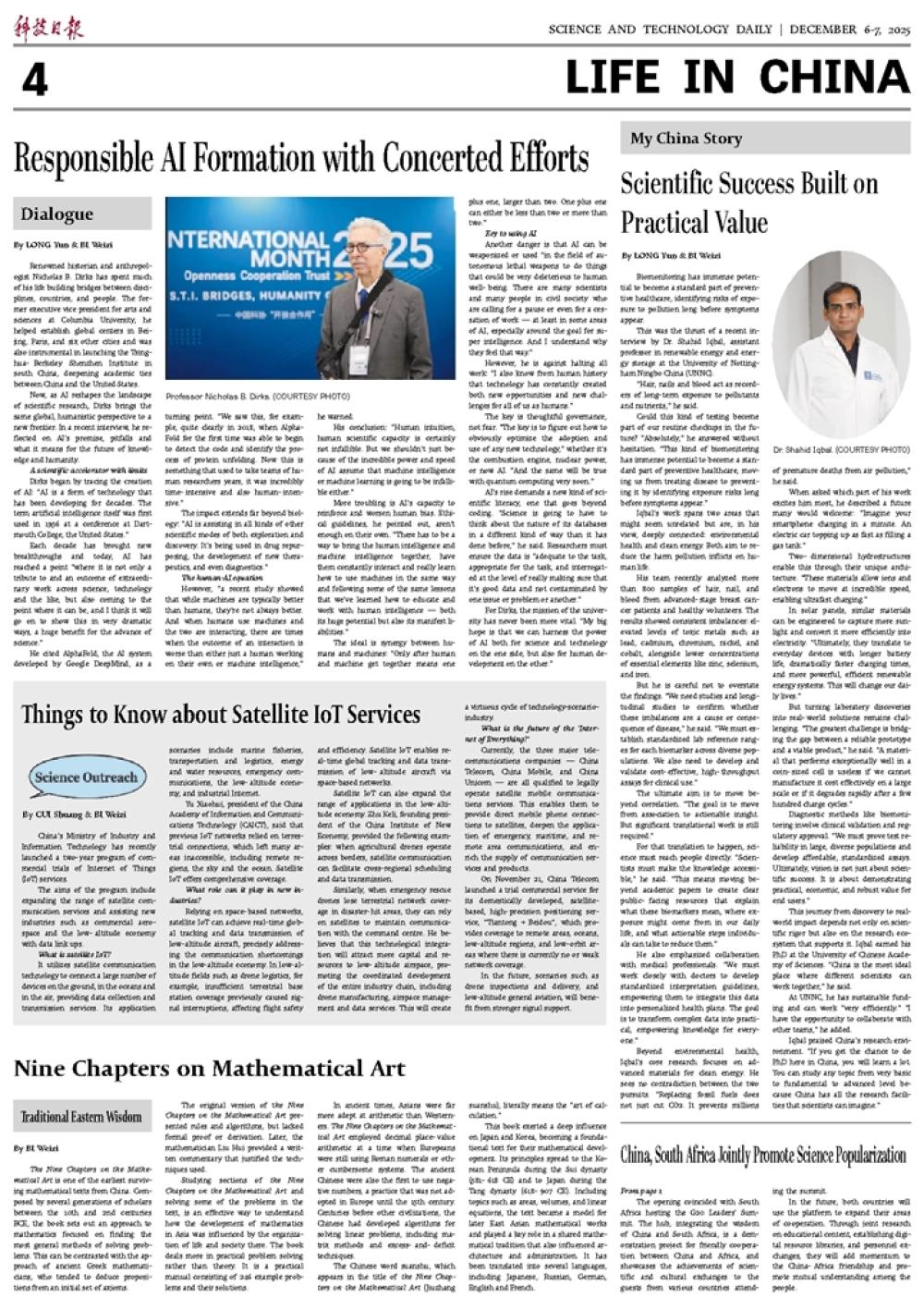
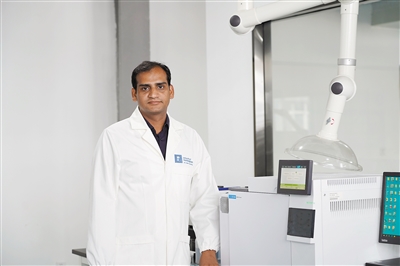
| Dr. Shahid Iqbal. (COURTESY PHOTO) |
Biomonitoring has immense potential to become a standard part of preventive healthcare, identifying risks of exposure to pollution long before symptoms appear.
This was the thrust of a recent interview by Dr. Shahid Iqbal, assistant professor in renewable energy and energy storage at the University of Nottingham Ningbo China (UNNC).
"Hair, nails and blood act as recorders of long-term exposure to pollutants and nutrients," he said.
Could this kind of testing become part of our routine checkups in the future? "Absolutely," he answered without hesitation. "This kind of biomonitoring has immense potential to become a standard part of preventive healthcare, moving us from treating disease to preventing it by identifying exposure risks long before symptoms appear."
Iqbal's work spans two areas that might seem unrelated but are, in his view, deeply connected: environmental health and clean energy. Both aim to reduce the harm pollution inflicts on human life.
His team recently analyzed more than 800 samples of hair, nail, and blood from advanced-stage breast cancer patients and healthy volunteers. The results showed consistent imbalances: elevated levels of toxic metals such as lead, cadmium, chromium, nickel, and cobalt, alongside lower concentrations of essential elements like zinc, selenium, and iron.
But he is careful not to overstate the findings. "We need studies and longitudinal studies to confirm whether these imbalances are a cause or consequence of disease," he said. "We must establish standardized lab reference ranges for each biomarker across diverse populations. We also need to develop and validate cost-effective, high-throughput assays for clinical use."
The ultimate aim is to move beyond correlation. "The goal is to move from association to actionable insight. But significant translational work is still required."
For that translation to happen, science must reach people directly. "Scientists must make the knowledge accessible," he said. "This means moving beyond academic papers to create clear public-facing resources that explain what these biomarkers mean, where exposure might come from in our daily life, and what actionable steps individuals can take to reduce them."
He also emphasized collaboration with medical professionals. "We must work closely with doctors to develop standardized interpretation guidelines, empowering them to integrate this data into personalized health plans. The goal is to transform complex data into practical, empowering knowledge for everyone."
Beyond environmental health, Iqbal's core research focuses on advanced materials for clean energy. He sees no contradiction between the two pursuits. "Replacing fossil fuels does not just cut CO2. It prevents millions of premature deaths from air pollution," he said.
When asked which part of his work excites him most, he described a future many would welcome: "Imagine your smartphone charging in a minute. An electric car topping up as fast as filling a gas tank."
Two-dimensional hydrostructures enable this through their unique architecture. "These materials allow ions and electrons to move at incredible speed, enabling ultrafast charging."
In solar panels, similar materials can be engineered to capture more sunlight and convert it more efficiently into electricity. "Ultimately, they translate to everyday devices with longer battery life, dramatically faster charging times, and more powerful, efficient renewable energy systems. This will change our daily lives."
But turning laboratory discoveries into real-world solutions remains challenging. "The greatest challenge is bridging the gap between a reliable prototype and a viable product," he said. "A material that performs exceptionally well in a coin-sized cell is useless if we cannot manufacture it cost effectively on a large scale or if it degrades rapidly after a few hundred charge cycles."
Diagnostic methods like biomonitoring involve clinical validation and regulatory approval. "We must prove test reliability in large, diverse populations and develop affordable, standardized assays. Ultimately, vision is not just about scientific success. It is about demonstrating practical, economic, and robust value for end users."
This journey from discovery to real-world impact depends not only on scientific rigor but also on the research ecosystem that supports it. Iqbal earned his PhD at the University of Chinese Academy of Sciences. "China is the most ideal place where different scientists can work together," he said.
At UNNC, he has sustainable funding and can work "very efficiently." "I have the opportunity to collaborate with other teams," he added.
Iqbal praised China's research environment. "If you get the chance to do PhD here in China, you will learn a lot. You can study any topic from very basic to fundamental to advanced level because China has all the research facilities that scientists can imagine."