

 Next
Next


 |
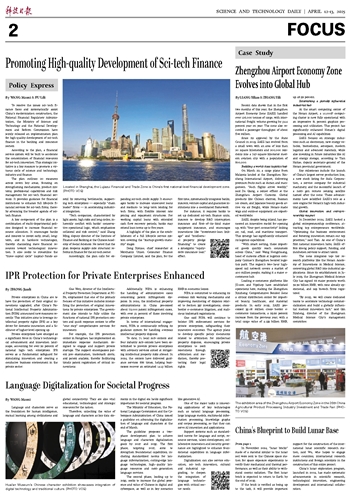
| Huai'an Museum's Chinese character exhibition showcases integration of digital technology and traditional culture. (PHOTO: VCG) |
 |
Language and characters serve as the foundation for human intelligence, mutual learning among civilizations and global connectivity. They are also vital educational, technological and strategic resources for the nation.
Therefore, unlocking the value of language and characters as key data elements in the digital era holds significant importance for societal progress.
The Ministry of Education, the National Language Commission and the Cyberspace Administration of China issued a guideline on advancing the digitalization of language and characters at the end of March.
The guideline proposes a two-phase development plan to achieve language and characters digitalization goals by 2027 and 2035. The first phase, targeting 2027, aims to strengthen foundational capabilities, including standardized norms for language informatization, cutting-edge language technologies, high-quality language resources and next-generation language services.
The second phase, leading up to 2035, seeks to increase the global presence and value of Chinese in digital and cyberspace, as well as in key scenarios like generative AI.
One of the major tasks is innovating applications of key technologies such as natural language processing, large language models, multimodal information processing, knowledge graphs and corpus processing, so that they can serve AI innovation and applications.
Support systems such as standardized norms for language and script, resource services, talent development, collaborative innovation and security governance are highlighted to enhance foundational capabilities in language informatization.
Digitalization can also service education, sci-tech innovation, cultural and industrial upgrading, to deepen the integration of language technologies with critical sector needs.