


 |
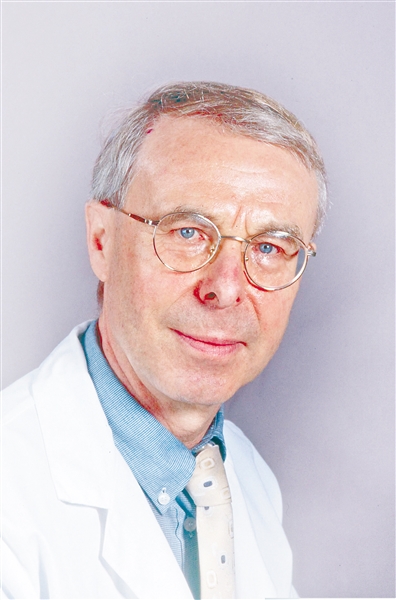
| Professor Alfred O. Mueck. (COURTESY PHOTO) |
Professor Alfred O. Mueck, a well-known expert in women's health and endocrinology, has a career that spans decades, marked by scientific innovation and cross-border collaboration.
A medical doctor as well as a pharmacologist and biochemist, Mueck is a professor at the University of Tübingen in Germany and former president of the German Menopause Society. He has also served as the honorary director of endocrinology at the Beijing Obstetrics and Gynecology Hospital, enhancing his ties with China.
Mueck's passion for science emerged early in life. Excelling in subjects like mathematics, physics and chemistry during high school, he decided to study chemistry and biology at the University of Stuttgart, where he earned his first doctorate. His initial professional role was at Novartis, one of the world's largest pharmaceutical companies, where he focused on steroid hormones, commonly known as sex hormones.
Recognizing the growing need for clinical pharmacologists, Novartis encouraged him to pursue a second doctorate in pharmacology. Mueck completed the degree at the University of Tübingen, which laid the groundwork for his expertise in clinical drug development.
Subsequently, he joined Heidelberg University, where encouraged by mentors and peers, he pursued a third doctorate degree in medicine at the age of 35 and established himself as an expert in biochemistry, pharmacology and medicine.
A pioneer in women's health
Mueck joined the University of Tübingen, where he headed the Gynecological Endocrinology and Menopause Center, developing cutting-edge research, particularly in breast cancer and hormone therapy. Under him, the department gained global recognition for its contributions to understanding the risks and benefits of hormone treatments.
Besides a researcher, Mueck is also a mentor and advisor. Even after stepping back from direct patient care, he continues to guide young doctors, offering consultations on complex cases.
Today, his influence can be seen not only in the 600 academic papers he has authored but also in the generations of researchers and doctors he has mentored. He was recognized as one of the top two percent scientists globally by Stanford University from 2021 to 2023.
A meeting that changed something
Mueck's relationship with China began in 2008 at an academic conference where he met Professor Ruan Xiangyan from the Beijing Obstetrics and Gynecology Hospital. A year later, Ruan invited Mueck to deliver a keynote lecture at an international symposium on menopause and gynecological endocrinology in Beijing. He spoke on hormone therapy and breast cancer and it marked the beginning of a fruitful partnership.
In 2010, Ruan visited his lab at the University of Tübingen to collaborate on research on hormone therapy and breast cancer risks. Her diligence inspired him to deepen his engagement with China and over the next decade, the two worked closely, co-establishing initiatives such as China's first Menopause Guidance Center and founding several academic societies.
Mueck's contribution to international collaboration made his colleagues call him a "golden bridge." He introduced numerous experts to China, including 11 professors from different countries, nine of whom were appointed guest professors at the Beijing Obstetrics and Gynecology Hospital.
He also played a key role in founding the Chinese editions of prestigious journals such as Gynecological Endocrinology and The European Journal of Contraception and Reproductive Health Care.
His efforts were recognized with the Chinese Government Friendship Award in 2015 and the Great Wall Friendship Award in 2017.
Mueck has visited China countless times. From walking the Great Wall to exploring Beijing's hutongs, he has developed a deep affection for the country. He is also inspired by China's rapid development and its contributions to global stability, ecological preservation and public health.
"I have witnessed remarkable progress in China," Mueck said. "[China's] integration into the global scientific community shows its dedication to innovation and collaboration."
This article was edited and translated by LONG Yun from the Chinese version.