


 |
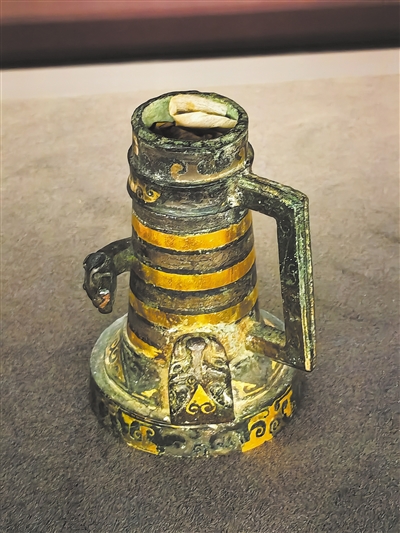
| A bronze chariot axle cap inlaid with gold and silver is displayed at an exhibition in Beijing on February 26, 2026. (PHOTO: VCG) |
China has over 4,000 years of bronze history perfecting numerous kinds of craftsmanship. One of them is Cuo Jin Yin, or gold and silver inlay, a traditional bronze decorative technique which originated in the Spring and Autumn period (770-476 BCE) and reached its peak from the middle and late Warring States period (475-221 BCE) through the Western Han dynasty (202 BCE-8 CE).
The inlay starts with pre-casting shallow grooves on the bronze surface on which the inlay is to be done. Then craftsmen insert thin strips of gold or silver (or wires) into the grooves and chisel the edges to refine the grooves. This is followed by hammering the strips or wires, so that they become deformed and fill the grooves. The last step is polishing, using sand-paper to burnish the bronze surface so that different gloss effects create protruding colorful motifs or inscriptions.
The Cuo Jin Yin technique rose not only due to the widespread use of ironware but also the emergence of intellectual creativity. As civilizations progressed, their material cultures flourished and new aesthetics were born.
Among various inlaid gold and silver motifs on bronze, the extant Chinese pictorial art was created. Craftsmen needed to inlay motifs on curved and narrow bronze surfaces. So they used foreshortening to construct dynamic scenes, evolving from the symmetrical patterns of the taotie, a beast in Chinese mythology symbolizing gluttony.
In the 20th century, the Western scholar Michael Sullivan introduced the Cuo Jin Yin technique to the Western world. In 2014, the gold and silver inlay craftsmanship was inscribed in China's national intangible cultural heritage list.