


 |
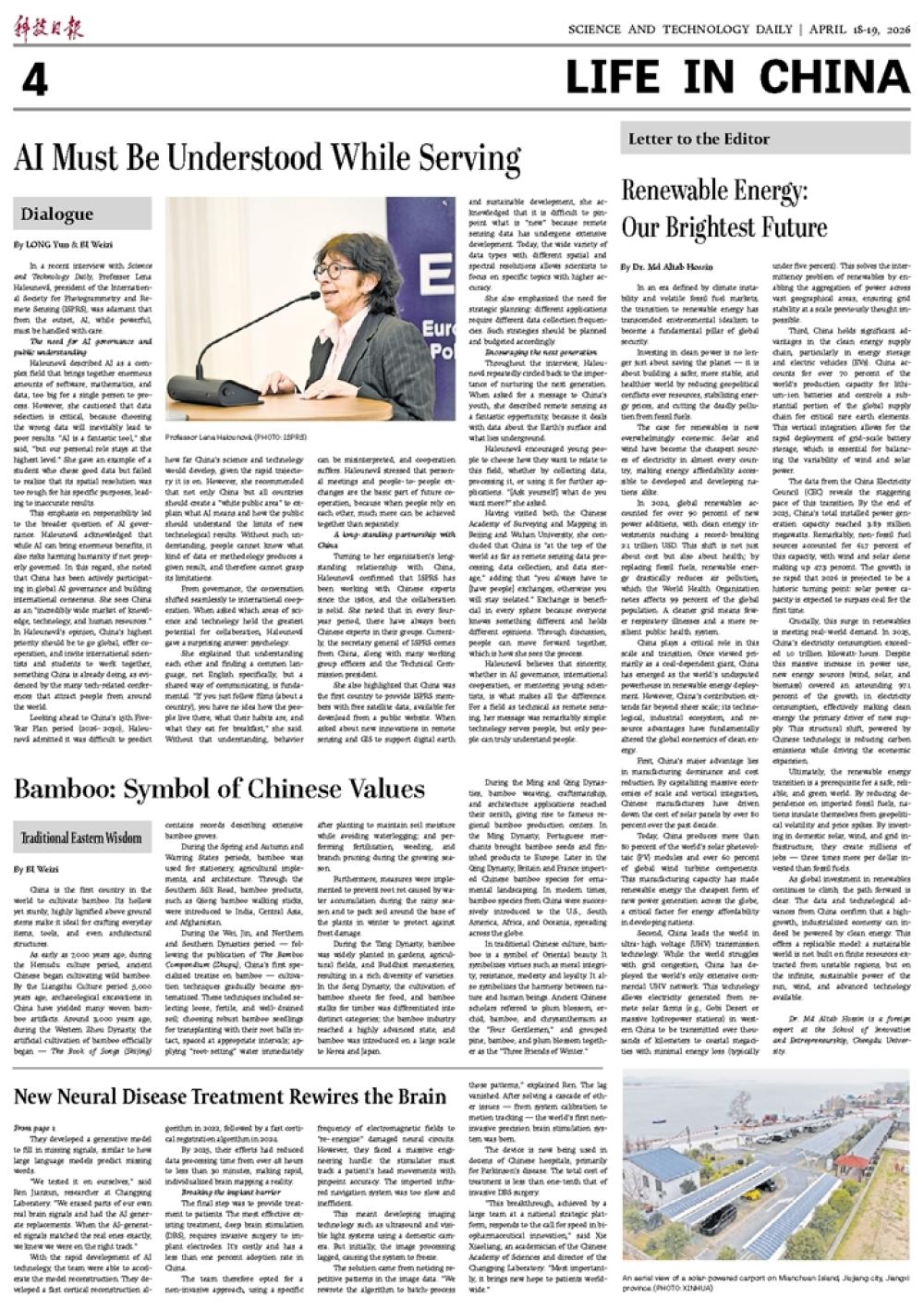
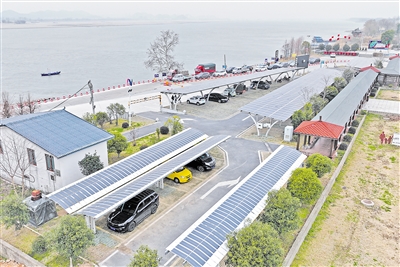
| An aerial view of a solar-powered carport on Mianchuan Island, Jiujiang city, Jiangxi province. (PHOTO: XINHUA) |
In an era defined by climate instability and volatile fossil fuel markets, the transition to renewable energy has transcended environmental idealism to become a fundamental pillar of global security.
Investing in clean power is no longer just about saving the planet — it is about building a safer, more stable, and healthier world by reducing geopolitical conflicts over resources, stabilizing energy prices, and cutting the deadly pollution from fossil fuels.
The case for renewables is now overwhelmingly economic. Solar and wind have become the cheapest sources of electricity in almost every country, making energy affordability accessible to developed and developing nations alike.
In 2024, global renewables accounted for over 90 percent of new power additions, with clean energy investments reaching a record-breaking 2.1 trillion USD. This shift is not just about cost but also about health; by replacing fossil fuels, renewable energy drastically reduces air pollution, which the World Health Organization notes affects 99 percent of the global population. A cleaner grid means fewer respiratory illnesses and a more resilient public health system.
China plays a critical role in this scale and transition. Once viewed primarily as a coal-dependent giant, China has emerged as the world's undisputed powerhouse in renewable energy deployment. However, China's contribution extends far beyond sheer scale; its technological, industrial ecosystem, and resource advantages have fundamentally altered the global economics of clean energy.
First, China's major advantage lies in manufacturing dominance and cost reduction. By capitalizing massive economies of scale and vertical integration, Chinese manufacturers have driven down the cost of solar panels by over 80 percent over the past decade.
Today, China produces more than 80 percent of the world's solar photovoltaic (PV) modules and over 60 percent of global wind turbine components. This manufacturing capacity has made renewable energy the cheapest form of new power generation across the globe, a critical factor for energy affordability in developing nations.
Second, China leads the world in ultra-high voltage (UHV) transmission technology. While the world struggles with grid congestion, China has deployed the world's only extensive commercial UHV network. This technology allows electricity generated from remote solar farms (e.g., Gobi Desert or massive hydropower stations) in western China to be transmitted over thousands of kilometers to coastal megacities with minimal energy loss (typically under five percent). This solves the intermittency problem of renewables by enabling the aggregation of power across vast geographical areas, ensuring grid stability at a scale previously thought impossible.
Third, China holds significant advantages in the clean energy supply chain, particularly in energy storage and electric vehicles (EVs). China accounts for over 70 percent of the world's production capacity for lithium-ion batteries and controls a substantial portion of the global supply chain for critical rare earth elements. This vertical integration allows for the rapid deployment of grid-scale battery storage, which is essential for balancing the variability of wind and solar power.
The data from the China Electricity Council (CEC) reveals the staggering pace of this transition. By the end of 2025, China's total installed power generation capacity reached 3.89 million megawatts. Remarkably, non-fossil fuel sources accounted for 61.7 percent of this capacity, with wind and solar alone making up 47.3 percent. The growth is so rapid that 2026 is projected to be a historic turning point: solar power capacity is expected to surpass coal for the first time.
Crucially, this surge in renewables is meeting real-world demand. In 2025, China's electricity consumption exceeded 10 trillion kilowatt-hours. Despite this massive increase in power use, new energy sources (wind, solar, and biomass) covered an astounding 97.1 percent of the growth in electricity consumption, effectively making clean energy the primary driver of new supply. This structural shift, powered by Chinese technology, is reducing carbon emissions while driving the economic expansion.
Ultimately, the renewable energy transition is a prerequisite for a safe, reliable, and green world. By reducing dependence on imported fossil fuels, nations insulate themselves from geopolitical volatility and price spikes. By investing in domestic solar, wind, and grid infrastructure, they create millions of jobs — three times more per dollar invested than fossil fuels.
As global investment in renewables continues to climb, the path forward is clear. The data and technological advances from China confirm that a high-growth, industrialized economy can indeed be powered by clean energy. This offers a replicable model: a sustainable world is not built on finite resources extracted from unstable regions, but on the infinite, sustainable power of the sun, wind, and advanced technology available.
Dr. Md Altab Hossin is a foreign expert at the School of Innovation and Entrepreneurship, Chengdu University.