


 |
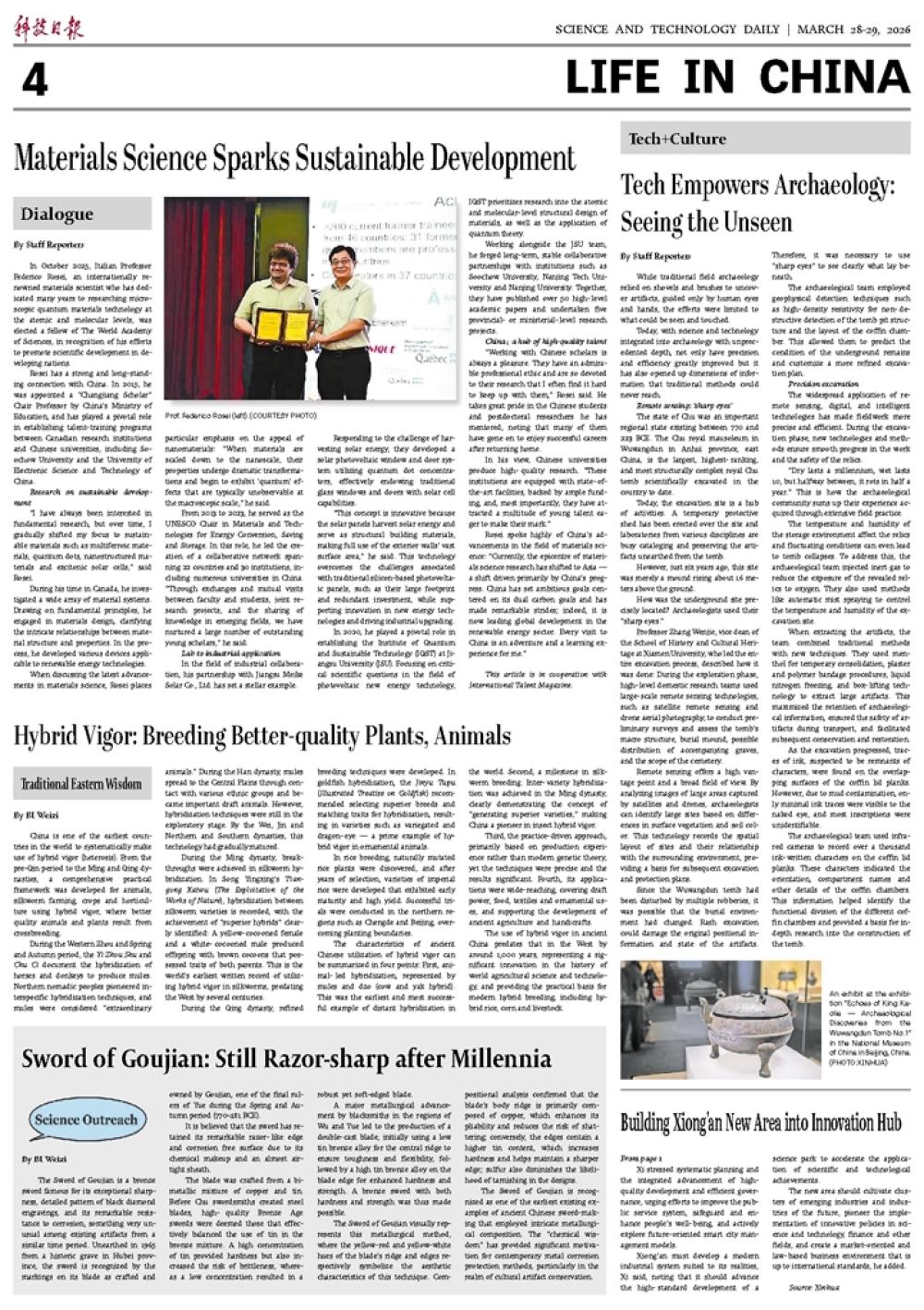
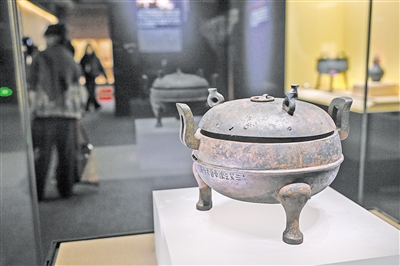
| An exhibit at the exhibition "Echoes of King Kaolie — Archaeological Discoveries from the Wuwangdun Tomb No. 1" in the National Museum of China in Beijing, China. (PHOTO: XINHUA) |
While traditional field archaeology relied on shovels and brushes to uncover artifacts, guided only by human eyes and hands, the efforts were limited to what could be seen and touched.
Today, with science and technology integrated into archaeology with unprecedented depth, not only have precision and efficiency greatly improved but it has also opened up dimensions of information that traditional methods could never reach.
Remote sensing: 'sharp eyes'
The state of Chu was an important regional state existing between 770 and 223 BCE. The Chu royal mausoleum in Wuwangdun in Anhui province, east China, is the largest, highest-ranking, and most structurally complex royal Chu tomb scientifically excavated in the country to date.
Today, the excavation site is a hub of activities. A temporary protective shed has been erected over the site and laboratories from various disciplines are busy cataloging and preserving the artifacts unearthed from the tomb.
However, just six years ago, this site was merely a mound rising about 16 meters above the ground.
How was the underground site precisely located? Archaeologists used their "sharp eyes."
Professor Zhang Wenjie, vice dean of the School of History and Cultural Heritage at Xiamen University, who led the entire excavation process, described how it was done: During the exploration phase, high-level domestic research teams used large-scale remote sensing technologies, such as satellite remote sensing and drone aerial photography, to conduct preliminary surveys and assess the tomb's macro structure, burial mound, possible distribution of accompanying graves, and the scope of the cemetery.
Remote sensing offers a high vantage point and a broad field of view. By analyzing images of large areas captured by satellites and drones, archaeologists can identify large sites based on differences in surface vegetation and soil color. This technology records the spatial layout of sites and their relationship with the surrounding environment, providing a basis for subsequent excavation and protection plans.
Since the Wuwangdun tomb had been disturbed by multiple robberies, it was possible that the burial environment had changed. Rash excavation could damage the original positional information and state of the artifacts. Therefore, it was necessary to use "sharp eyes" to see clearly what lay beneath.
The archaeological team employed geophysical detection techniques such as high-density resistivity for non-destructive detection of the tomb pit structure and the layout of the coffin chamber. This allowed them to predict the condition of the underground remains and customize a more refined excavation plan.
Precision excavation
The widespread application of remote sensing, digital, and intelligent technologies has made fieldwork more precise and efficient. During the excavation phase, new technologies and methods ensure smooth progress in the work and the safety of the relics.
"Dry lasts a millennium, wet lasts 10, but halfway between, it rots in half a year." This is how the archaeological community sums up their experience acquired through extensive field practice.
The temperature and humidity of the storage environment affect the relics and fluctuating conditions can even lead to tomb collapses. To address this, the archaeological team injected inert gas to reduce the exposure of the revealed relics to oxygen. They also used methods like automatic mist spraying to control the temperature and humidity of the excavation site.
When extracting the artifacts, the team combined traditional methods with new techniques. They used menthol for temporary consolidation, plaster and polymer bandage procedures, liquid nitrogen freezing, and box-lifting technology to extract large artifacts. This maximized the retention of archaeological information, ensured the safety of artifacts during transport, and facilitated subsequent conservation and restoration.
As the excavation progressed, traces of ink, suspected to be remnants of characters, were found on the overlapping surfaces of the coffin lid planks. However, due to mud contamination, only minimal ink traces were visible to the naked eye, and most inscriptions were unidentifiable.
The archaeological team used infrared cameras to record over a thousand ink-written characters on the coffin lid planks. These characters indicated the orientation, compartment names and other details of the coffin chambers. This information helped identify the functional division of the different coffin chambers and provided a basis for in-depth research into the construction of the tomb.