
 Next
Next


 |
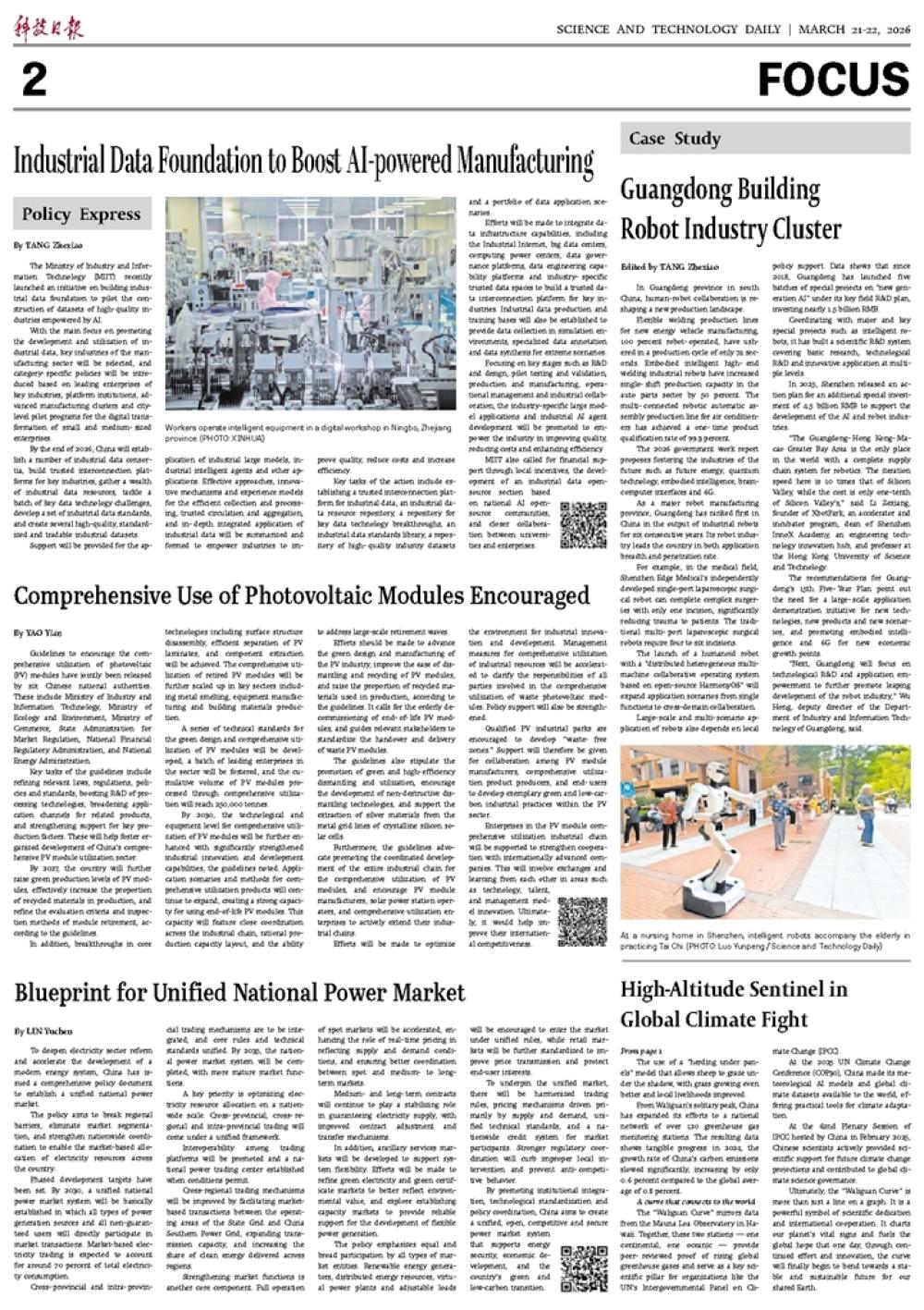
To deepen electricity sector reform and accelerate the development of a modern energy system, China has issued a comprehensive policy document to establish a unified national power market.
The policy aims to break regional barriers, eliminate market segmentation, and strengthen nationwide coordination to enable the market-based allocation of electricity resources across the country.
Phased development targets have been set. By 2030, a unified national power market system will be basically established in which all types of power generation sources and all non-guaranteed users will directly participate in market transactions. Market-based electricity trading is expected to account for around 70 percent of total electricity consumption.
Cross-provincial and intra-provincial trading mechanisms are to be integrated, and core rules and technical standards unified. By 2035, the national power market system will be completed, with more mature market functions.
A key priority is optimizing electricity resource allocation on a nationwide scale. Cross-provincial, cross-regional and intra-provincial trading will come under a unified framework.
Interoperability among trading platforms will be promoted and a national power trading center established when conditions permit.
Cross-regional trading mechanisms will be improved by facilitating market-based transactions between the operating areas of the State Grid and China Southern Power Grid, expanding transmission capacity, and increasing the share of clean energy delivered across regions.
Strengthening market functions is another core component. Full operation of spot markets will be accelerated, enhancing the role of real-time pricing in reflecting supply and demand conditions, and ensuring better coordination between spot and medium- to long-term markets.
Medium- and long-term contracts will continue to play a stabilizing role in guaranteeing electricity supply, with improved contract adjustment and transfer mechanisms.
In addition, ancillary services markets will be developed to support system flexibility. Efforts will be made to refine green electricity and green certificate markets to better reflect environmental value, and explore establishing capacity markets to provide reliable support for the development of flexible power generation.
The policy emphasizes equal and broad participation by all types of market entities. Renewable energy generators, distributed energy resources, virtual power plants and adjustable loads will be encouraged to enter the market under unified rules, while retail markets will be further standardized to improve price transmission and protect end-user interests.
To underpin the unified market, there will be harmonized trading rules, pricing mechanisms driven primarily by supply and demand, unified technical standards, and a nationwide credit system for market participants. Stronger regulatory coordination will curb improper local intervention and prevent anti-competitive behavior.
By promoting institutional integration, technological standardization and policy coordination, China aims to create a unified, open, competitive and secure power market system that supports energy security, economic development, and the country's green and low-carbon transition.