
 Next
Next


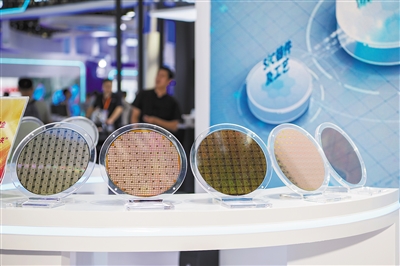 |
| The photo shows wafer products displayed by participating companies at the WeSemiBay Semiconductor Industry Ecosystem Expo 2025 at the Shenzhen Convention and Exhibition Center, October 15, 2025. (PHOTO: VCG) |
The Economic Affairs Ministry of the Netherlands invoked the rarely used Goods Availability Act to intervene in Chinese-owned semiconductor maker Nexperia's affairs, barring the company from transferring assets, dismissing executives, or making major decisions for one year without the Dutch government's approval.
The Amsterdam Court of Appeal also ruled to remove Nexperia's Chinese CEO, appointing a non-Chinese executive on an interim basis.
Headquartered in Nijmegen, Nexperia produces chips mainly for Europe's automotive and consumer electronics industries and is among the world's largest suppliers of diodes and transistors.
The Dutch government cited "serious administrative shortcomings" for the intervention, saying its action is intended to prevent supply disruptions and safeguard Europe's economic security.
The move came shortly after the United States imposed additional export restrictions on subsidiaries with at least 50 percent ownership by a sanctioned Chinese firm. This includes Nexperia's parent company, which is on Washington's "Entity List."
Responding to speculation about U.S. influence, the Netherlands denied U.S. involvement, calling the timing "purely coincidental."
However, Amsterdam Court of Appeal documents released on October 14 suggest close coordination between Dutch and U.S. officials. Records show that in June, the Dutch Ministry of Foreign Affairs met with the U.S. Bureau of International Security and Nonproliferation.
According to the minutes, the U.S. side said that "the fact that the company's CEO is still the same Chinese owner is problematic," and that a leadership change was necessary for Nexperia to qualify for an entity list exemption.
The documents also reveal that Nexperia's so-called "administrative shortcomings" referred mainly to its reluctance to adopt changes sought by the Dutch government to align with U.S. sanctions. References to Washington's "50 percent rule" appear repeatedly, including a note that the early implementation of the rule during a U.S. government shutdown forced the Netherlands to act hastily.
Under Washington's demand, Nexperia's CEO cannot be Chinese, and Chinese investment may ultimately have to exit the firm. For a Chinese-owned enterprise, such a "de-Sinicization" transformation is unreasonable, absurd, and unacceptable.
In reality, it is the excessive U.S. sanctions that have disrupted Nexperia's normal operations and jeopardized Europe's economic security. Instead of opposing this hegemonic pressure, the Dutch government has chosen to intervene directly in a Chinese business to accommodate U.S. demands — misidentifying the real culprit.
This move by the Dutch authorities not only violates the legitimate rights of Chinese investors but also damages the Netherlands' own international image and business environment.
A Reddit user named "Bixbeat" remarked, "As a Dutch citizen, can't say I'm thrilled about this move in the slightest… We've tanked our international reputation quite handily with this."
In today's interconnected world, openness, cooperation, and mutual benefit are the prevailing trends and shared aspirations. Politicizing, weaponizing, and securitizing technology and trade undermine global economic growth and innovation.
The Dutch government should follow the tide of cooperation, promptly correct its excessive intervention in Chinese enterprises, and have the courage to say "no" to unjust attempts to contain China.