 Next
Next


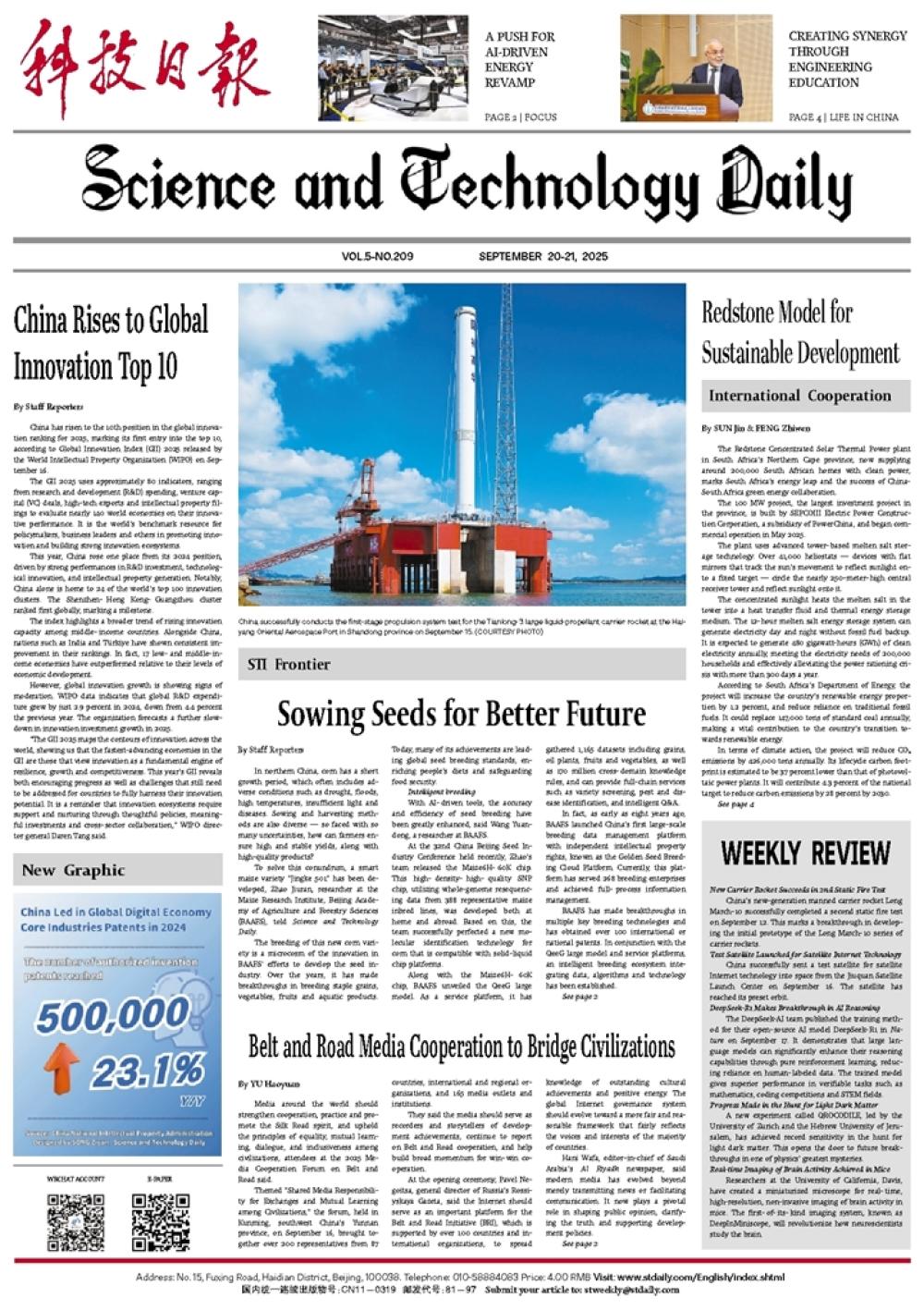
China has risen to the 10th position in the global innovation ranking for 2025, marking its first entry into the top 10, according to Global Innovation Index (GII) 2025 released by the World Intellectual Property Organization (WIPO) on September 16.
The GII 2025 uses approximately 80 indicators, ranging from research and development (R&D) spending, venture capital (VC) deals, high-tech exports and intellectual property filings to evaluate nearly 140 world economies on their innovative performance. It is the world's benchmark resource for policymakers, business leaders and others in promoting innovation and building strong innovation ecosystems.
This year, China rose one place from its 2024 position, driven by strong performances in R&D investment, technological innovation, and intellectual property generation. Notably, China alone is home to 24 of the world's top 100 innovation clusters. The Shenzhen-Hong Kong-Guangzhou cluster ranked first globally, marking a milestone.
The index highlights a broader trend of rising innovation capacity among middle-income countries. Alongside China, nations such as India and Türkiye have shown consistent improvement in their rankings. In fact, 17 low- and middle-income economies have outperformed relative to their levels of economic development.
However, global innovation growth is showing signs of moderation. WIPO data indicates that global R&D expenditure grew by just 2.9 percent in 2024, down from 4.4 percent the previous year. The organization forecasts a further slowdown in innovation investment growth in 2025.
"The GII 2025 maps the contours of innovation across the world, showing us that the fastest-advancing economies in the GII are those that view innovation as a fundamental engine of resilience, growth and competitiveness. This year's GII reveals both encouraging progress as well as challenges that still need to be addressed for countries to fully harness their innovation potential. It is a reminder that innovation ecosystems require support and nurturing through thoughtful policies, meaningful investments and cross-sector collaboration," WIPO director general Daren Tang said.