
 Next
Next


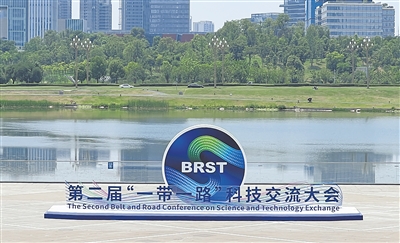 |
| The Second Belt and Road Conference on Science and Technology Exchange is held from June 10 to 12 in Chengdu, Sichuan province. (PHOTO: LU Zijian / Science and Technology Daily) |
China has been working with all parties to continuously implement the sci-tech innovation cooperation plan under the Belt and Road Initiative (BRI), injecting strong impetus into the high-quality Belt and Road cooperation, said Chinese Vice Premier Ding Xuexiang on June 11 at the opening ceremony of the second Belt and Road Conference on Science and Technology Exchange in Chengdu, Sichuan province.
The conference was held from June 10 to 12 to provide sci-tech support for high-quality Belt and Road cooperation.
Ding called for enhanced solidarity and cooperation, implementing the International Science and Technology Cooperation Initiative, and promoting sci-tech innovation to better benefit humanity.
The conference declared support for the new international big science programs spearheaded by Chinese scientists, launched a cooperation plan for sci-tech innovation in AI and traditional Chinese medicine under the BRI, and initiated the fourth batch of Belt and Road joint laboratories.
Five Belt and Road sci-tech innovation cooperation alliances were launched for cooperation on sci-tech zones, spatial information, low-carbon technology, agriculture and public health.
Sichuan and Chongqing municipality jointly launched the Chengdu-Chongqing Belt and Road International Sci-Tech Cooperation "Double Thousand" Plan and a technology transfer center to deepen cooperation with Belt and Road partner countries in joint research, technology transfer, and sci-tech cultural exchanges. The plan comprises the "Thousand Cooperation Projects Initiative" and the "Thousand Young Scientists Exchange Initiative."
The Chengdu Declaration on Jointly Building the Belt and Road Science, Technology and Innovation Community pledged to jointly build an innovation-driven, open and inclusive Belt and Road STI Community that would also be fair and equitable, universally beneficial and sustainable to bring prosperity to all.
Since the first conference in Chongqing in 2023, China has been implementing the Belt and Road Science, Technology and Innovation Cooperation Action Plan, and advancing sci-tech and cultural exchanges, jointly building laboratories and sci-tech zones, and promoting technology transfer.
On June 12, as the conference concluded, eight major new outcomes were announced, including the release of the English edition of the National Innovation Index Report 2024 and the official launch of the International Meridian Circle Program.
The National Innovation Index Report 2024 provided an updated comprehensive analysis of 40 countries that together contribute over 95 percent of global R&D expenditure.
A total of 103 bilateral cooperation achievements were showcased by the conference's host organizations and local science and technology administrative departments, spanning key areas such as AI and traditional Chinese medicine. Additionally, China's Ministry of Science and Technology signed 28 bilateral cooperation documents with foreign science and technology authorities attending the conference.