

 Next
Next


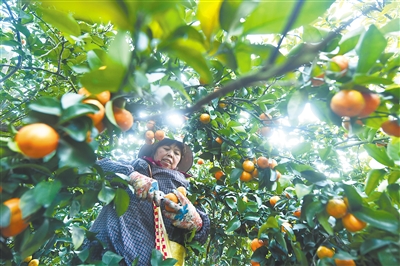 |
| A woman harvests sugar tangerines at a village in Liujiang district of Liuzhou city, south China's Guangxi Zhuang autonomous region. (PHOTO: XINHUA) |
China aims to increase the level of grain supply and other vital agricultural products, as it pushes grain production capacity to steadily reach 700 million metric tonnes.
That's according to a recent comprehensive rural revitalization plan, spanning 2024 to 2027, released by the Central Committee of the Communist Party of China and the State Council, aiming to address issues such as food security and agricultural modernization, and improve the quality of life in rural areas.
At its core, the plan prioritizes technological innovation, industrial growth, green transformation, infrastructure upgrades, and the development of digital villages.
According to the plan, by 2027, China aims to achieve significant progress in rural revitalization, laying a solid foundation for agricultural modernization by 2035.
Reducing the urban-rural divide
The plan seeks to bridge the urban-rural gap by improving rural infrastructure. Investments will focus on upgrading water supply systems and energy networks, while also enhancing housing and rural public services. Initiatives such as a rural roads improvement campaign will be implemented to boost connectivity and accessibility for rural communities.
It also encourages the flow of talented personnel and related technologies to rural areas, and calls for coordinated urban and rural planning and the equalization of basic public services across both regions.
To ensure sustainable economic growth in rural regions, China will step up its efforts to cultivate a modern rural industrial system. The plan stresses fostering industries based on local specialties, upgrading agricultural processing capabilities and expanding rural tourism.
Moreover, the integration of primary, secondary, and tertiary industries is encouraged to create value-added supply chains and enhance farmers' incomes. Agricultural e-commerce and logistics systems will also be put in place to boost market access for rural products.
Tech innovation prioritized
The plan prioritizes technological innovation as a cornerstone for modernizing agriculture. Key measures include enhancing research on critical technologies, advancing smart agricultural equipment, and promoting precision farming techniques.
To strengthen agricultural productivity, China plans to implement projects such as the National Black Soil Protection Program and develop high-standard farmland. Efforts will focus on building national seed resource platforms and supporting innovative enterprises in the seed industry.
To modernize governance and economic activities in rural areas, an upgrade is expected in digital infrastructure, implementation of smart agriculture solutions, and expanded access to e-government services. Programs such as the Digital Village Development Action Plan will be implemented to integrate technology into education, healthcare and cultural activities, ensuring that rural residents benefit from digital advancements.
China is intensifying its efforts to transition toward green and low-carbon agricultural practices, harmonizing ecological protection with economic growth. Key steps include promoting organic fertilizers, reducing chemical inputs, and advancing water-saving farming techniques.
Tackling agricultural pollution, strengthening biodiversity conservation, and encouraging circular agriculture are also included in the plan, which aligns with the broader goal of reducing greenhouse gas emissions and mitigating climate change impacts in rural areas.