

 Next
Next


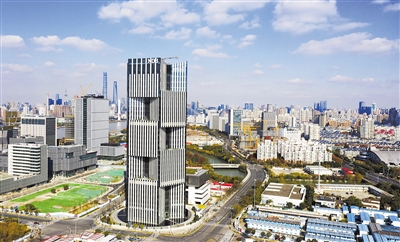 |
| The BRICS New Development Bank is headquartered in Shanghai, supporting infrastructure and sustainable development projects in BRICS countries and other emerging economies and developing countries. (PHOTO: VCG) |
With Indonesia becoming a member of BRICS recently, the growing influence of the Global South has gained momentum.
Indonesia's Foreign Ministry said joining the cooperation mechanism is a strategic move to strengthen cooperation with other developing countries under the principles of equality, mutual respect and sustainable development.
As a country with a diverse and fast-growing economy, Indonesia will contribute to the BRICS agenda, including strengthening economic resilience, technical cooperation, and sustainable development. It will also contribute to addressing global challenges such as climate change, food security and public health.
China's Foreign Ministry said Indonesia, a large developing country and an important force in the Global South, recognizes the BRICS spirit and participates in the "BRICS+" cooperation.
China has been the leading proponent of expanding BRICS to BRICS+ to make it more representative of the developing world and give it a stronger voice on the global stage, according to the East Asia Forum. Indonesia's formal accession to BRICS is in line with the common interests of BRICS countries and the Global South, and will contribute to the development of the BRICS.
"BRICS has become one of the most important organizations on Earth, bringing together nations with massive populations, enormous economies, and incredible productive capacities," news outlet Geopolitical Economy Report said.
On January 1, 2024, Egypt, the United Arab Emirates, Iran and Ethiopia became new members of BRICS. In November 2024, after the BRICS Summit in Kazan, Russia, nine countries — Indonesia, Malaysia, Thailand, Belarus, Bolivia, Cuba, Kazakhstan, Uzbekistan and Uganda — were designated as BRICS partners. According to Russian news agency TASS, more than 20 countries have showed their interest in joining BRICS.
An emerging priority for BRICS is to serve as a platform where developing countries can express their concerns and interests. The group advocates for the use of local currencies in trade among its members, especially in trade with China, as well as supporting rules-based, open and transparent global trade. The expansion of its membership clearly aligns with this goal, East Asia Forum said.
As an international organization composed of emerging market countries, BRICS aims to promote dialogue and cooperation and safeguard the common interests of emerging market economies and developing countries.
The BRICS economies account for an estimated 37.3 percent of global GDP based on purchasing power parity, according to a report by the World Economic Forum. In the manufacturing sector, BRICS countries account for over 40 percent of the world's total output, playing an indispensable role in the global supply chain. In terms of food production, they produce 42 percent of the world's wheat, 52 percent of rice, and 46 percent of soybeans, serving as a pillar of global food security.
BRICS+ acts as the voice of the Global South in multilateral forums. The expansion of BRICS+ stands to become a boon for the global economy, according to an article published in the BRICS Journal of Economics.