

 Next
Next


 |
| (PHOTO: VCG) |
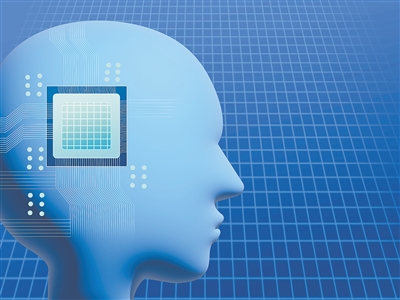
Elon Musk said in a recent post on social media platform X that the patient who had received a brain implant from his Neuralink company, the first human to do so, is doing well. The patient can control and move a computer mouse on the screen by "thinking."
The news comes after Neuralink last year began recruiting people for a clinical trial of the brain chip.
The technological focal points of the trial are the implant and the surgical robot that inserts the device. According to the Neuralink website, the chip, called N1, is hermetically sealed in a biocompatible enclosure that can withstand physiological conditions several times harsher than those in the human body.
The N1 is powered by a small battery charged wirelessly from outside via a compact, inductive charger that enables easy use from anywhere. It has over 1,000 electrodes distributed across 64 highly flexible, ultra-thin threads to record neural activity. The threads are so fine that they can't be inserted by the human hand. So the surgical robot has been designed to do the job.
The robot has three main components: the head, body and base. The head is like a helmet with embedded cameras and sensors to map the patient's brain, and the surgical needle. This is where the patient's head is placed. The body of the robot holds the parts that give it mobility. The base balances the robot and contains the technology for operating the entire system.
In the coming days, as Neuralink and Musk provide more details of the trial, it will be seen how significant the implant is as a scientific advancement.