


 |
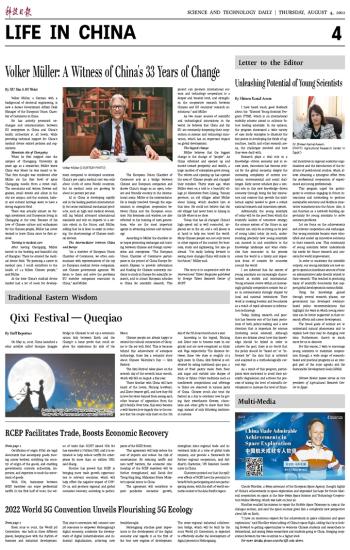
| A cartoon picture shows Niulang and Zhinv meet on the 7th day of the 7th lunar month once a year. (PHOTO: VCG) |
On May 21, 2018, China launched a relay satellite called Queqiao (magpie bridge in Chinese) to set up a communication link between Earth and the Chang'e-4 lunar probe that could explore the mysterious far side of the Moon.
Chinese people are always happy to extend the cultural connotation of Queqiao to the sci-tech field. This is because behind this achievement of aerospace technology, there lies a romantic story about Chinese Valentine's Day — Qixi Festival.
The Qixi Festival takes place on the seventh day of the seventh lunar month, which will fall on August 4 this year.
Those familiar with China will have heard of the lovers, Niulang (cowboy), and Zhinv (weaver girl), and how they fell in love but were banned from seeing each other because of opposition from the girl's family. Over time, this story became a well-known love tragedy due to the reason that the couple only meet on the 7th day of the 7th lunar month once a year.
According to the legend, Niulang and Zhinv rose to become stars in our galaxy and are now recognized as Altair and Vega respectively. The distance between these two stars is roughly 16.4 light years. In China, Qixi Festival is celebrated by eating traditional qiao guo, a kind of fried pastry made from flour and sugar and molded into shapes of fruits or fishes. Other traditions such as needlework competitions and offerings to Zhinv are observed in various parts of China. Chinese youth also treat the festival as a day to celebrate love by giving their sweethearts flowers, chocolates and other gifts to show their feelings, instead of only following traditional customs.