

 |
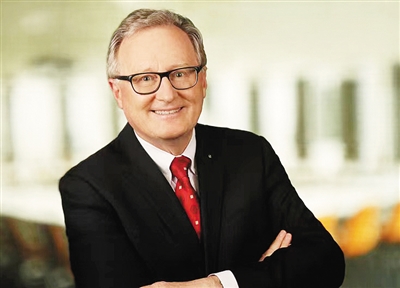
| Professor Rudolf Bauer. (COURTESY PHOTO) |
Professor Rudolf Bauer, head of the Institute of Pharmaceutical Sciences at the University of Graz in Austria, became involved in traditional Chinese medicine (TCM) research 30 years ago, when he was invited to serve on the scientific advisory board of the first German hospital of TCM.
Since then, Bauer has developed a keen interest in TCM. Exploring the mechanism of Chinese medicine and tapping into its great potential have become Bauer's lifelong career. Due to his outstanding contribution to promoting international exchanges in the field of TCM, he was presented with the Chinese Government Friendship Award in 2020.
Love of TCM
Bauer has grown to love TCM over thirty years of research and has a profound affinity for China and its deep traditional culture. He believes that the purpose of medical study is not only to solve technical difficulties, but also to thoroughly comprehend the culture behind medicine.
Initially he discovered that TCM culture is vast and complex, making it difficult for him to properly comprehend and convey its concept. Therefore, he decided to introduce the treasure of TCM to more European scientists in order to foster the integration and exchange of ideas between Eastern and Western medical professionals.
Over the past 30 years, Bauer has been to China more than 80 times to increase the mutual understanding between young researchers from China and Austria. Simultaneously, his laboratory has welcomed over a hundred Chinese researchers and students. Bauer has not only developed several international TCM professionals but also disseminated TCM culture to a larger audience.
Exploring the mystery behind TCM
In the long-term cooperation with the Chinese research team, Bauer has been repeatedly impressed by the efficacy of Chinese medicine. He found that TCM often achieves "miraculous" results in the prevention and treatment of diabetes and coronary heart disease. He noted on many occasions that, "Prevention and early treatment is a very valuable aspect of Chinese medicine."
Bauer underlined that TCM regards the human life process as a whole. Simultaneously, it closely combines people with their environment, fully considers all the influencing factors, and maximizes the overall health needs of the human body in the process of diagnosis and treatment.
His understanding of TCM theory and its efficacy laid a solid foundation for his research on TCM. Since the outbreak of COVID-19, he has consistently applauded the clinical value of TCM in combating outbreaks of major infectious diseases. In a letter to Lei Fengyun, Counselor for Science and Technology of the Chinese Embassy in Austria, he wrote, "Such epidemics have a long history in human society, and Chinese medicine has played an important role in the history of human [efforts to] combat severe infectious diseases."
Serving as a bridge
In the 1990s, the research on Chinese herbal medicine in Europe was almost non-existent. "Herbal mixtures are also used in Europe, but Chinese medicine has a deep theoretical foundation of oriental philosophy," said Bauer. With the dedication of a scholar and recognition of Chinese medicine, Bauer began his exploration from "zero" and attempted to fill the gap of European research on Chinese medicine.
He also understands the difficulties and challenges TCM research is facing. Nonetheless, Bauer is quite optimistic about its future. "Although we still know very little about the study of Chinese medicine, compared to the molecules of a newly discovered synthetic drug, we were also initially unaware of its effects. Therefore, humans can't progress unless we continue to explore the unknown," he said.
Bauer has published more than 370 papers and compiled more than 100 collections in the field of Chinese herbal medicine. While making outstanding academic achievements, he also realized that the promotion of TCM research should rely not only on individual efforts, but also on a broader platform along with the strength of more experts and scholars. Since 2008, under his organization and coordination, experts and scholars in the fields of pharmacy and acupuncture from more than 10 Universities in Austria have cooperated with the China Academy of Chinese Medical Sciences, to carry out long-term and stable cooperation. Thanks to his efforts, the University of Graz established several joint research centers with Chinese organizations.
Building a healthy world
In Bauer's opinion, standardized clinical research and high-quality product standards are the foundation for global acceptance of TCM. Therefore, he continues to study TCM quality evaluation and publishes research findings in a timely manner, in order to speed up the globalization of TCM practices. Seventy-three Chinese herbs, including Acanthopanacis Cortex, have been included into the European Union Pharmacopeia (EPU) as a result of Bauer's continued efforts in recent years, accounting for more than one-third of the 184 herbs in the EPU.
Since 2003, he has organized and participated in more than 50 international conferences in the field of TCM held in China. As a member of the World Federation of Chinese Medicine Societies, he participated in the establishment of "World Chinese Medicine Day" and actively promotes TCM in Europe. Bauer firmly believes that, "Chinese Medicine can make an important contribution to building a healthy world."
This story is in cooperation with the International Talent Magazine published by Foreign Talent Research Center of MOST.