


 |
| Giant Pandas at Sichuan Giant Panda Sanctuaries. (PHOTO: VCG) |
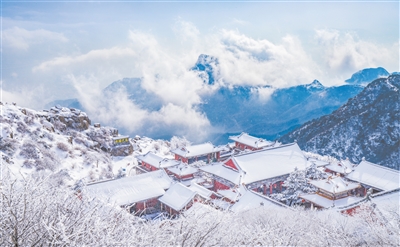 |
| The snow scene of the Mount Taishan. (PHOTO: VCG) |
 |
| Beijing section of the Grand Canal. (PHOTO: VCG) |
Since joining the International Convention Concerning the Protection of World Cultural and Natural Heritage in 1985, China has, to date, listed 56 world heritage sites.
According to the National Forestry and Grassland Administration, China has the most significant number of world natural heritage sites.
The country is now home to 14 world natural heritage sites, and four mixed heritage sites noted for both cultural and natural features, both of which top the world in terms of quantity. These heritage sites effectively protected China's unique geological relics, mountains, forests and lakes, as well as the rare and endangered animals and plant species.
In addition, these sites have contributed to the protection of cultural relics, intangible cultural heritage, and historic cities, towns and villages, generating annual tourism direct revenue of more than 14 billion RMB (approximately 2.1 billion USD).
Currently, these sites are primarily protected and managed in forms of national parks, natural reserves, and scenic spots. China increased its efforts to safeguard these natural reserves in recent years, and the preservation of these sites is in good condition overall.
Let's take a closer look at some of more well known sites.
Mount Taishan (mixed heritage site)
Mount Taishan was listed as China's first World Cultural and Natural Heritage site by UNESCO in 1987, with its natural and cultural values combined. It had once been the focus of imperial worship for more than two thousand years, and the creative masterpieces found there are in perfect harmony with the surrounding scenery. It has always inspired Chinese artists and intellectuals, and represents old Chinese civilizations and beliefs.
Sichuan Giant Panda Sanctuaries (natural heritage site)
Home to more than 30 percent of the world's pandas, the Sichuan Giant Panda Sanctuaries encompass 924,500 hectares and include seven natural reserves and nine scenic parks in the Qionglai and Jiajin Mountains. The sanctuaries represent the largest remaining area of giant panda habitat. It is also the essential habitat for captive breeding of the species. The sanctuaries shelter endangered species such as the red panda, the snow leopard, and the clouded leopard. It was inscribed on the World Heritage List in 2006.
The Grand Canal (cultural heritage site)
Inscribed on the World Heritage List in 2014, the Grand Canal is a huge waterway system in China's north-eastern and central-eastern plains, stretching from Beijing in the north, to Zhejiang province in the south. Constructed in different sections, beginning in the 5th century BC, the Grand Canal was finally connected in Sui Dynasty (581-618) and used to improve transportation between south and north China. It gradually became the north-south transport artery for more than a thousand years. In ancient China, the canal served as a pillar of the economy, social stability, and government functions.
According to the introduction of UNESCO, the construction of the Grand Canal "led to a series of gigantic construction sites, creating the world's largest and most extensive civil engineering project prior to the Industrial Revolution."