

 Next
Next


 |
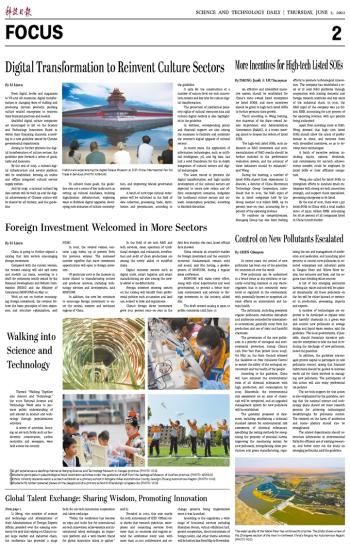
| The water quality of the Yellow River has continued to improve. The photo shows a view of the Zhongwei section of the river in northwest China's Ningxia Hui Autonomous Region. (PHOTO: VCG) |
In recent years, the control of new pollutants has been one of the priorities for countries all over the world.
New pollutants can be understood in a broad sense as any synthetic or naturally occurring chemical or any microorganism that is not commonly monitored or regulated in the environment, with potentially known or suspected adverse effects on environment and human health.
The pollutants, including persistent organic pollutants, endocrine disruptors and antibiotics controlled by international conventions, generally come from the production and use of toxic and harmful chemicals.
The governance of the new pollutants is a priority of ecological and environmental protection during China's 14th Five-Year Plan period (2021-2025). On May 24, the State Council released the Guideline on New Pollutants Control to ensure the safety of the ecological environment and the health of the people.
According to the guideline, China will have screened the environmental risks of all chemical substances with high production and consumption by 2025. Meanwhile, the environmental risk assessment on an array of chemicals will be completed, and an upgraded management system for new pollutants will be established.
The guideline proposed 18 measures, including establishing a technical standard system for environmental risk assessment of chemical substances, specifying the testing methods for recognizing the property of potential harms, improving the monitoring system for new pollutants, strengthening clean production and green manufacturing, regulating the use and management of antibiotics and pesticides, and launching pilot projects to control new pollutants in selected enterprises and industrial parks in Yangtze River and Yellow River basins, key estuaries and bays, and the regions near drinking water sources.
A list of key emerging pollutants harming air, water and soil will be updated dynamically. All those pollutants on the list will be either banned or restricted in production, processing, imports and exports.
A number of technologies are expected to be developed to replace toxic and harmful chemicals in a green way and control new pollutants in sewage sludge and liquid waste residue, said the guideline. The local governments, if possible, should formulate incentive policies for enterprises to take the lead in reducing the discharge of new pollutants, noted the guideline.
In addition, the guideline encouraged private capital to participate in new pollutants control, saying that financial institutions should be guided to increase credit aid for those involved in managing new pollutants. The participants of this action will also enjoy preferential tax policies.
The sci-tech support for this action is also emphasized by the guideline, noting that the national science and technology plans should set more research projects for achieving technological breakthroughs for pollutants control. The research on the harm of antibiotics and micro-plastics should also be strengthened.
The related departments should restructure laboratories in environmental fields for efficient use of existing resources, and better carry out the study on emerging pollutants, said the guideline.