

 Next
Next


 |
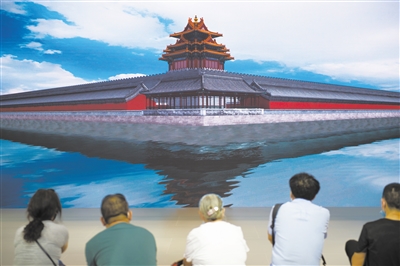 |
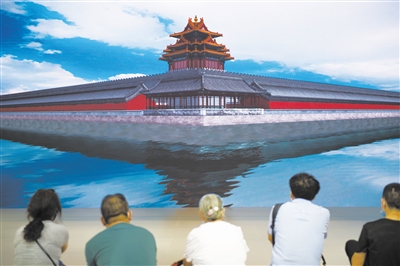
| Visitors are experiencing the digital Palace Museum at 2021 China International Fair for Trade in Services. (PHOTO: XINHUA) |
From digital books and magazines to VR and AR museums, digital transformation is changing ways of making and producing cultural products, pushing culture related enterprises to reinvent their business practices and models.
Qualified digital culture companies are encouraged to list on the Science and Technology Innovation Board to widen their financing channels, according to a new guideline issued by Chinese governmental departments.
Aiming to further promote the digital transformation of culture sectors, the guideline puts forward a series of goals, tasks and measures.
By the end of 2025, a cultural digital infrastructure and service platform will be established, forming an online and offline integrated cultural service supply system.
And by 2035, a national cultural big data system will be built up and the digital achievements of Chinese culture will be shared by all citizens, said the guideline.
To achieve these goals, the guideline sets out a series of key tasks such as setting up cultural databases, building digitalization infrastructure, exploring ways to facilitate digital upgrades, developing new scenarios of culture consumption, and improving related governance systems.
A batch of new-type cultural enterprises will be cultivated in the field of data collection, processing, trade, distribution and presentation, according to the guideline.
It calls for the construction of a number of nation-level sci-tech innovation centers and key labs for culture digital transformation.
The protection of intellectual property rights of cultural resources data and cultural digital content is also highlighted in the guideline.
In addition, corresponding policy and financial support are also among the measures to facilitate and accelerate the country's digital upgrade of cultural sectors.
In recent years, the application of information technologies, such as artificial intelligence, 5G, and big data, has laid a solid foundation for the in-depth integration of cultural sectors and digital technologies.
The latest moves to promote the digital transformation and high-quality development of the cultural sectors are expected to create new online and offline consumption scenarios, invigorate the traditional culture sectors and unleash consumption potential, according to Sinolink Securities.