

 Next
Next


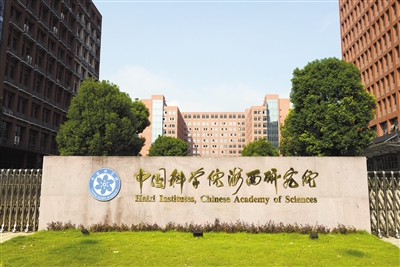 |
| Haixi Institutes of Chinese Academy of Sciences in Fuzhou, Fujian province. (PHOTO: VCG) |
The scientific research and technological development institutions (research institutions) are important components of the national sci-tech fore, which reflects the national will, serves the national needs, and represents the national sci-tech ability.
The role and rights of research institutions are expanded in the revised Law on Progress of Science and Technology, which was enacted on January 1, 2022.
According to Wen Ke, professor at the University of Chinese Academy of Sciences, the improved revision related to research institutions further lays a legal foundation for the modern research institution system.
In article 56 of the law, it specifies the identity of research institutions, namely the new-type innovation agent, explicitly supporting their innovative development modes in terms of investment, management, operation and employment and granting them the legal status as agents. A clear identity removes the barriers that institutions may encounter in future development, helping them focus on scientific research and technological innovation, said Wen in an article published in Guangming Daily.
In the 2007 version of the law, article 44 stipulates that research institutions should carry out sci-tech R&D activities based on their stipulated articles. However, this clause ignores a fact that some research institutions don't have their own articles, said Wen.
For those institutions having articles of associations, they could abide by the regulation to conduct sci-tech R&D activities. However, for those without articles, there was no standard to abide by. Hence a disparity in the implementation of this article appeared, according to Wen.
In the revised law, it is added in article 51 that a research institution should formulate their articles of association, in which the function and business scope should be clarified. Thus, the fundamental status of articles of association in the management and operation of a research institution is legally established.
Compared with the 2007 version, the revised law has further reinforced and highlighted the strategic role of research institutions as the core carrier of national strategic sci-tech strength, empowering the research institutions with more rights, including the rights of performance appraisal, salary distribution, professional title evaluation, commercialization of sci-tech achievements and income distribution, and post setting.
The rights of cooperation between a research institution and other counterparts have also been expanded, with technical consultation and technical services added, in addition to the existing right of joint research and development.
Actually, in recent years, China has attached continuous attention to the self-reform of the research institutions and issued a series of policies and documents, which laid a solid foundation for the revision.
For example, the Action Plan to Promote the Commercialization of Sci-tech Achievements was rolled out by the State Council in 2016, which stipulated that the rights of using and disposing of commercialization of sci-tech achievements and the right of income earned from the commercialization, were delegated to research institutions and universities.
The revised law puts the policy documents into the articles of legislation, which is a positive response to the sci-tech voice of the times. Wen said this amendment offers legal protection for the operations of the research institutions.