
 Next
Next
 China's R&D Spending Hits Record in 2021
- CHINA: BIRTHPLACE OF SKIING
- Beijing 2022 Ushers in Cooperation and Development
- Chinese Thought Behind Snow Sports Venues
- Inactivated COVID-19 Vaccines Effective Against Delta Variant
- WEEKLY REVIEW
- Course Launched for Closer Lancang-Mekong Cooperation
- Follow us
- 无标题


 |
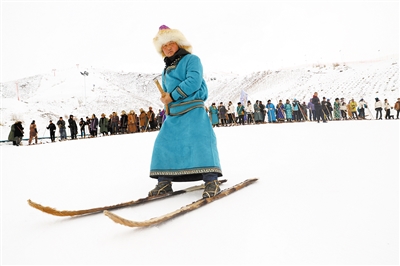
| Local Tuvan people are skiing on homemade skis in Altay. (PHOTO: VCG) |
 |
The origin of skiing can be traced back to 10,000 years ago in Altay prefecture of Xinjiang Uygur Autonomous Region, China.
In 2005, a well-preserved carved painting was found in Altay, which clearly recorded the scene of ancient ancestors chasing prey with skis on their feet and poles in their hands. According to the archaeologists, this petroglyph is at least 12,000 years old.
In 2015, at the International Ancient Skiing Culture Exchange Conference in Altay, more than 30 skiing history researchers from 18 countries, including Norway, Sweden and Finland, jointly issued the Altay Declaration, agreeing that Altay is the oldest skiing region in the world.
The discovery of the Altay cliff paintings was preceded by ancient history books that recorded the skiing and skating activities of Chinese people. The oldest description of skis appears in the book of Shan Hai Jing written by a Chinese scholar of Han Dynasty between 206 BC and 225 BC.
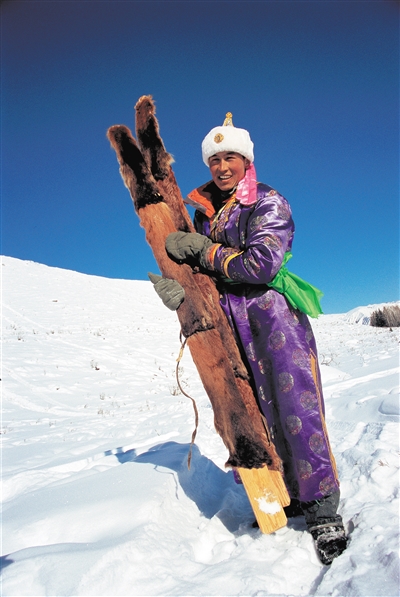
"... people of the Dingling nationality living in the Altay mountains of northwest China sped like goats in the valleys and on the flatlands wearing the 'horns of goats' - a kind of knee high fur boot under which is bound a wooden board with a hoof - shaped front tip," the book describes.
During ancient times, skiing was an essential part of people's productive lives during the coldest periods of the year. It's hard to move around and go hunting without skis. The bottom of the skis are covered with horse-hide and fur, which allows the skis to slide downward faster while preventing them from slipping backward when traveling uphill.
As people's needs for survival in winter were satisfied, ice and snow sports for the sake of recreation and relaxation, started to emerge.
During the Sui and Tang Dynasties (613-628), the ethnic minorities in the north of China mastered ice and snow sport. Song Dynasty (960-1279) saw the invention of Bingxi, which is a winter event performed regularly for royal members.
Beginning with the ice parades of the royal army, Bingxi gradually became a showcase for the skating skills of soldiers and stimulated widespread public interest. Bingxi in the Qing Dynasty (1644-1912) included the speed and figure skating we now see at the Winter Olympics.
From the wisdom of survival in the ice and snow in ancient times, to the passionate competition in the modern Winter Olympics, humankind has always been keen to discover the unique pleasures and great rewards hidden in the cold.
Traditional Eastern Wisdom