

 Next
Next


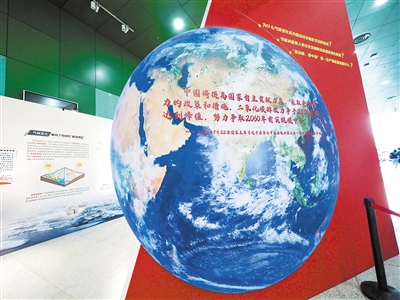 |
Achieving carbon emissions peak and carbon neutrality and striving to build a clean, low-carbon, safe and efficient energy system is a major commitment made by China. To fulfill it, concerned departments of the State Council are adopting relevant guidelines.
The Guideline on Accelerating the Development of New Types of Energy Storage
The National Development and Reform Commission and the National Energy Administration jointly issued the Guideline in order to promote the rapid development of new types of energy storage, which plays an important role in realizing carbon emissions peak and carbon neutrality in the energy sector.
The Guideline clarifies that by 2025, new types of energy storage will be transformed from the initial stage of commercial use to large-scale application. The innovation of new energy storage technology will be significantly improved, with more core technology and equipment independently controllable, and considerable progress will be made in achieving its high safety, low cost, high reliability, and long life of use. The standard and industrial systems will be basically complete. The market environment and business model is expected to reach an installed capacity of more than 30 million kilowatts.
The aim is to realize comprehensive, market -oriented development of new types of energy storage by 2030. Technological innovation and industrial levels in this field are world leaders. The standard system, market mechanism, and business model are deeply integrated with all aspects of the power system. The installed capacity can basically meet the needs of the new power system, and new types of energy storage will be one of the key supports for peaking carbon emissions and achieving carbon neutrality in the energy sector.
The Guideline also puts forward the need to improve technological innovation capabilities in developing new types of energy storage. It is necessary to carry out forward-looking, systematic and strategic research and development of key energy storage technologies, persist in the diversification of the technologies, and try to lower the cost of relatively mature technologies such as lithium-ion batteries, and make them more feasible for large-scale commercial use. Long-term storage technologies, such as compressed air and flow batteries have entered the early stages of business development, and large-scale trials of flywheel energy storage, sodium-ion batteries and other technologies should be accelerated. Research and demo applications should also be focused on hydrogen, heat and other innovative storage technologies based on demand.
The Carbon Neutrality Technology Innovation Action Plan for Colleges and Universities
Meanwhile, in order to provide sci-tech support, as well as a guarantee to provide a talent pool to achieve the goal of carbon neutrality, the Ministry of Education has formulated an Action Plan for colleges and universities.
The Action Plan asks for colleges and universities to facilitate achieving the goals of carbon neutrality, including improving the talent training and cultivation system, making breakthroughs in basic research, key technologies and innovation capabilities, transforming scientific and technological achievements into applications, strengthening international cooperation and exchange, as well as enhancing studies of carbon neutrality strategies.
According to the Action Plan, colleges and universities should take advantage of their basic research capabilities and interdisciplinary integration, accelerate the building of carbon neutrality technological innovation and talent training systems, and speed up applications of relevant scientific and technological results in key areas, industries and regions.
Achieving carbon emissions peak and carbon neutrality will not only benefit China's economic development, environment and public health, but also contribute to global climate change actions and sustainable development. To make the world a better place, China is now doing its part, and the world needs to do theirs too.